PI Handbook
August 2026 edition
Preface
This Handbook is designed to provide principal investigators at the University of Massachusetts Dartmouth with guidance on sponsored research practices, serve as a quick reference for general inquiries, and highlight resources available to assist Principal Investigators (PIs) in managing their responsibilities related to sponsored research and scholarship.
The Handbook has three primary objectives:
- To offer guidance to Principal Investigators on the development and administration of sponsored projects.
- To outline the roles and responsibilities of Principal Investigators in the administration and compliance of sponsored projects.
- To consolidate and organize essential information related to research administration in a single, accessible document for all stakeholders.
Chapter 1 Definitions
1. Office of Research and Innovation (ORI) Organization
The Office of Research and Innovation (ORI) is structured, see Figure 1.1, to support and advance the institution’s research goals through a range of specialized offices. An integral part of the ORI is the Office of Research Administration (ORA), which provides essential pre-award support, guiding faculty and researchers through the application process for grants and funding opportunities. Complementing this, the Research Development and Partnerships team provides proposal development support, fosters strategic planning, and cultivates new research initiatives as well as interdisciplinary and multi-institutional collaborations. The Research Support unit offers resources and services that assist researchers throughout the project lifecycle, from post-award management (including day-to-day support of PIs) to compliance with institutional policies. The Institutional Ethics and Compliance office ensures that all research activities meet the highest ethical standards and comply with regulatory requirements, safeguarding both researchers, participants, and the institution. The Office of Technology Commercialization and Ventures (OTCV) focuses on translating research discoveries into viable products and innovations, facilitating the commercialization process and fostering entrepreneurial ventures. The Office of Research Platforms and Analytics oversees critical research infrastructure, such as core facilities and online platforms, and delivers actionable research data intelligence. Finally, the Office of Undergraduate Research (OUR) encourages student involvement in research activities, providing and managing mentorship, funding, and opportunities for undergraduates to engage in scholarly projects. Together, these offices form a comprehensive ecosystem within the ORI to support research excellence, innovation, and ethical practice across the institution.
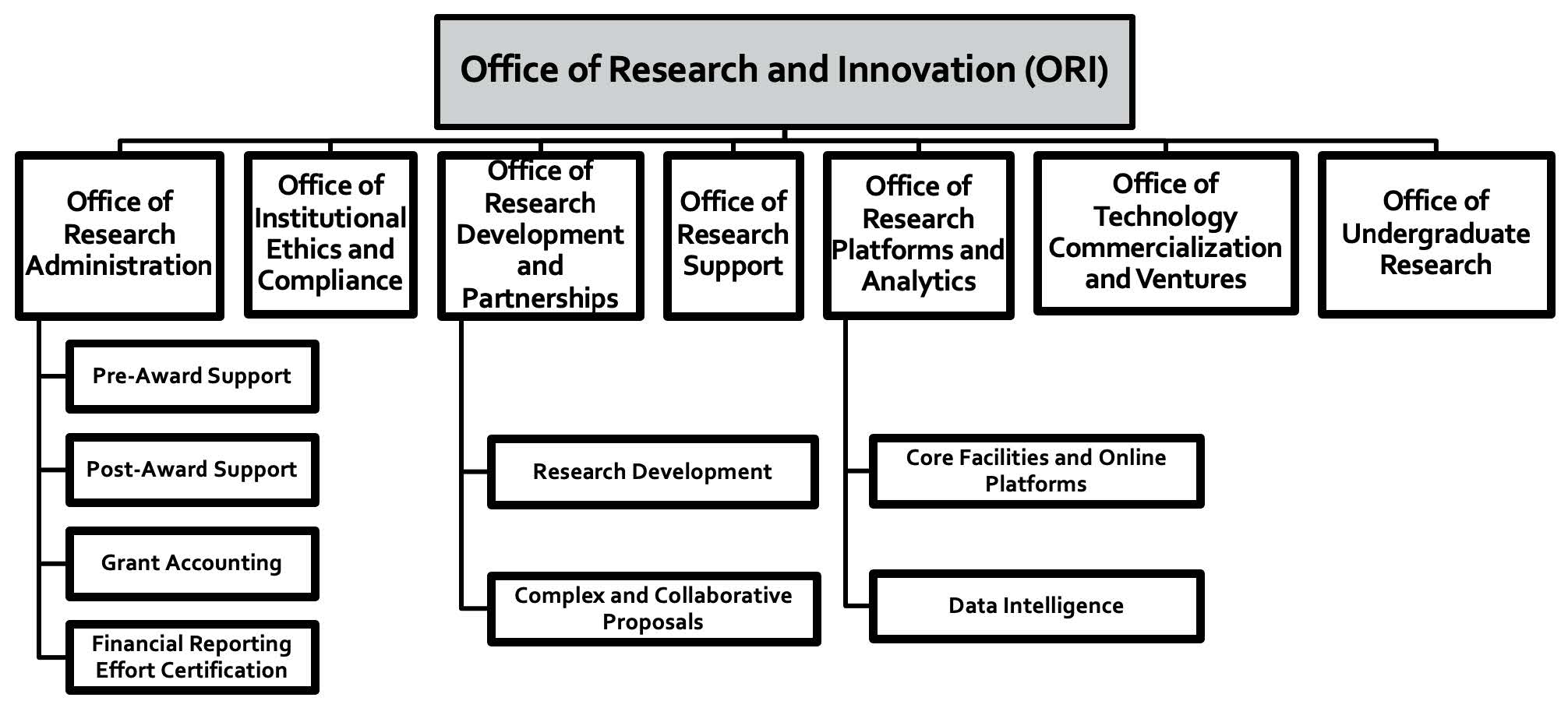
Figure 1.1: ORI organizational structure, divided by office; each office's reporting departments are listed underneath their main office.
- Office of Research and Innovation (ORI)
- Office of Research and Administration
- Pre-Award Support
- Post-Award Support
- Grant Accounting
- Financial Reporting Effort Certification
- Office of Institutional Ethics and Compliance
- Office of Research Development and Partnerships
- Research Development
- Complex and Collaborative Proposals
- Office of Research Support
- Office of Research Platforms and Analytics
- Core Facilities and Online Platforms
- Data Intelligence
- Office of Technology Commercialization and Ventures
- Office of Undergraduate Research
- Office of Research and Administration
2. Types of Sponsored Projects
A sponsored project is defined as an activity that is sponsored, or funded, by an external organization, such as a federal or state agency, or private organization.
Key Information 2.1: The characteristics of a sponsored project
- Specific scope of work or set of specific aims
- Financial accountability and/or reporting
- Specific period of performance
- Deliverables, including a final technical report
- Disposition of property
Sponsored awards may be made by using a variety of mechanisms, each with varying levels of expectation and involvement on the part of the sponsor. If the University receives an award from a sponsor (a federal or state agency; a private entity; or a foundation) that requires reporting (technical and/or financial) or deliverables, it must be processed through ORA.
The three main types of sponsored projects are: grants, cooperative agreements, and contracts.
A grant is formally defined in 2 CFR 200.1 “Grant agreement” and is used when the principal purpose of the project is to accomplish a public purpose of support or stimulation.
If the grant is federal, it is authorized by a federal statute. A grant is a type of assistance mechanism. The exact course of the work and the outcome of a grant may not be precisely defined. For example, the federal government may give the University a grant to study the anticarcinogenic potential of a certain molecule. At the conclusion of the study, the researchers may find that that molecule does not appear to have anticarcinogenic properties. Neither the University, nor the investigators, will be penalized for such an outcome.
A cooperative agreement is formally defined at 2 CFR 200.1 “Cooperative agreement” and is similar to a grant, in that its purpose is public support or stimulation. Therefore, a cooperative agreement is also using an assistance mechanism. However, the difference with a grant is that the sponsor is often much more involved in the design and implementation of the project. The nature of such involvement is often defined and specified in advance.
A contract is formally defined in 2 CFR 200.1 “Contract” and is used when the primary purpose of the transaction is acquisition of property or services for the direct benefit or use of the sponsor. There is substantial sponsor involvement and contract performance is monitored closely to ensure accomplishment of the contract goals. For example, the federal government may give some funds to the University to build a certain instrument, where it is expected that this instrument be built on time and exactly to the specifications detailed in the contract. Contracts carry a much higher responsibility.
3. Principal Investigators
The Principal Investigator (PI) is the individual designated by the University to be responsible for preparing the proposal and conducting the research and scholarly work once the proposal is funded. The PI is also responsible for the administration and management of the sponsored project once awarded. All proposals submitted for external funding are expected to be consistent with the goals and objectives of the department, college, or institution and should also assess the impact of the project on the future resources of the organization and any changes in the level of institutional support which may result from the acceptance of an award.
3.1 PI eligibility
Individuals in Categories I and II are eligible to serve as a PI.
Category I: Tenure track individuals with the following titles
- Professor, Associate Professor, Assistant Professor
- Chancellor Professor, Commonwealth Professor
- Research Professor of all ranks
Category II: Other full-time benefited employees with the following titles
- Provost, Vice Provost, Associate Provost, Chief Research Officer (CRO)
- Vice Chancellor, Associate Vice Chancellor, Assistant Vice Chancellor, who also hold an academic position or must be approved by the Provost, CRO, or Chancellor
- Dean, Associate Dean
- Director of a Center who also hold an academic position or must be approved by the Provost, CRO, or Chancellor
- Other non-academic ranks with the permission of the Division Head and CRO
Individuals in Category III must obtain approval of the Department Chair, the Dean, and the CRO. Their approval is indicated by their signatures on the proposal routing form.
Category III:
- Emeritus, Research Associates, Adjunct Faculty
- Clinical Professor of all ranks, Teaching Professors of all ranks
The following positions are not normally eligible to serve as an investigator:
- Visiting and other short-term appointees
- Post-Doctoral Fellows, except for fellowship awards in which case the approvals of the Department Chair and Dean are required
- Part-time Lecturers / Faculty
Contributions from individuals outside the university
Individuals outside the University can contribute to sponsored projects unless prohibited by the sponsor. External individuals may represent themselves (through a consulting agreement) or their institution (through a subaward).
Consultants are individuals who are not members of the University, have substantial expertise related to the project, and represent themselves not their institution.
- Consultants may be paid by the project, at a reasonable rate and for a limited number of hours.
- Consultants cannot be affiliated with the University. Intra-university consulting is considered part of professional duties and will not be a reason for additional pay
- Potential conflicts of interest need to be seriously considered. For example, it may not be appropriate for the PI to ask her spouse or children to serve as consultants. In such cases, all permissions need to be obtained and a management plan may be needed.
Subawards are used when the external entity is another University or institution. For example, UMass Lowell may be a subrecipient to UMass Dartmouth, with one or several UMass Lowell faculty members being paid through the subaward. In such cases, a subrecipient letter of commitment and other documents may be needed. Subawards should be considered only when needed. UMass Dartmouth, as the prime award recipient, has the responsibility for the technical and financial integrity of the entire project including the work that is done by the subrecipients. Furthermore, subawards require substantial administrative work to review and sign contracts between UMass Dartmouth and other entities. Therefore, extreme care should be exercised in selecting the right subaward recipients, limiting their numbers, and limiting the budget that is given to the subrecipients.
3.2 Responsibilities of the Principal Investigator
The PI or their designee is responsible for notifying ORI of their intent to submit a proposal as soon as possible (see also internal proposal submission timeline in Section 3.1 of the next Chapter). This includes ensuring the proposal routing form is completed, including appropriate department and college signatures. The PI is also responsible for:
- preparing all forms required by the sponsor and assembling the final proposal package, both electronic and hard copy proposals,
- understanding the proposal format requirements and ensuring the proposal meets those requirements,
- working with and supported by ORA to ensure that all budgetary detail as required by sponsor and ORA is provided and that projected costs are compliant with federal, state, university and sponsor guidelines and requirements,
- ensuring that any pre-approvals required for use of human subjects, use of animals in research, or export-controlled technologies are obtained,
- providing required supporting documentation to ORA prior to proposal submission. Requirements include verification of all cost share and match included in the proposal by the individual responsible for providing the cost share or match. See the section on cost share/match for additional information.
3.3 Life cycle of a sponsored project
Each sponsored project has a life cycle. It typically starts with developing an idea and ends in submitting the final reports.
Key Information 3.1: The life cycle of a sponsored project
- Develop the idea;
- Identify the funding opportunity;
- Prepare the proposal (technical aspects, budget, and other ancillaries);
- Submit the proposal;
- Set up the award (if funded);
- Execute the project;
- Submit the periodic technical and financial reports;
- Perform close out and submit the final technical, financial, and patent reports.
Chapter 2 Pre-award activities
1. Funding sources
Funding for research can come from federal and state agencies, foundations, corporations, and sometimes private donors. If you do not already have a good idea of the funding source, expect to spend some time searching for possibilities. Faculty can contact Research Development for assistance.
UMass Dartmouth subscribes to the GrantForward database. Faculty can sign in to GrantForward using their UMass Dartmouth email. There are several help-guides available once signed in, and faculty can use their CV to have GrantForward generate funding searches. In addition, faculty can access Hanover Research via a request to CRO or the Research Development manager. Hanover provides services on proposal review, proposal revision, consult call, and grants prospecting. Faculty and staff may also access the Grants Learning Center (GLC) for two self-guided virtual courses for step-by-step proposal development of
- NSF CAREER
- NIH grants
plus a series of trainings on Grant Essentials. Each course contains training modules designed to walk faculty through the various stages of developing competitive proposals. The GLC includes hands-on tutorials, recent Hanover webinars, examples of winning proposals, annotated applications, and insights from past reviewers and Program Officers.
Grants.gov is the federal repository for all federal funding opportunities. You can search Grants.gov by agency, categories, eligibility, and key words. Similar searches can be carried out within specific funding agencies (e.g., NIH or NSF).
University Advancement, through the Office of Corporate Engagement and Institutional Partnerships, can assist with finding foundation funding opportunities and with proposals made to foundations and corporations.
2. Proposal preparation
All proposals requesting funding from an external sponsor must go through the ORA, the office on campus with legal authority to submit the proposal on behalf of the Institution. The authorized officials for sponsored projects at UMass Dartmouth are the Chief Research Officer, the Director of Research Administration, and the Pre-award Managers. Sponsors fund projects based on the professional expertise of the PIs submitting proposals. However, the formal award is made in the University’s name. When the award is accepted, the PI assumes the responsibility for conducting and completing the technical work, administering the project according to State and Federal regulations, completing reports in a timely fashion, all consistent with policies of the sponsor and the University. Applications submitted without the review and approval by ORA are not considered official submissions and may be administratively withdrawn if the applications are found to be noncompliant with Sponsor, University, State or Federal policies and procedures.
2.1 Proposal guidelines
Most funding agencies publish detailed guidelines on how to prepare a proposal (e.g. page limits, font size, spacing and margins), budget restrictions (what you are allowed to pay for with the award), number of proposals per PI or institution, etc. PIs are expected to read these requirements carefully.
Budget and budget justification preparation
While Research Development together with Pre-Award can provide assistance, the PI is responsible for preparing the budget and budget justification. A budget template is available and should be used to accurately develop your budget. Other templates and samples are provided on our website. It is important to use the most recent budget template. ORA will provide an official review of the budget once finalized.
Direct cost items
Direct cost items are items that directly benefit the project. In addition to paying individuals, the PI can potentially request other legitimate direct costs such as supplies, research equipment, consultancy fees, etc. A potential list of asks is shown below. Depending on the type of funding, recipient institution, and other factors, some costs are “allowable” and some are not. Each sponsored project is unique and may support only some of these items. For example, a particular NSF grant may allow for purchasing of a certain equipment, but not for salaries, supplies, or other items.
Please see Table 2.2 and 2.3 for a list of specific direct cost items. In addition, subawards are used to pay other institutions that collaborate with you in conducting the project. A subaward may have multiple expense categories (e.g., personnel, stipends, supplies, etc).
The subaward appears as one of the direct costs, typically under the “other direct cost” line item.
Indirect costs
Items that receive indirect costs in federal grants include salaries, wages, fringe benefits, supplies, equipment, travel, contractual and consultancy fees, communications, software, recruiting costs, and maintenance costs. These costs are part of the Modified Total Direct Cost (MTDC) base upon which indirect costs are calculated. Any indirect rate that is different from the University’s negotiated rate must be approved by the CRO prior to proposal submission.
Items that do not receive indirect costs in federal grants include participant costs, equipment, tuition and renovations and alterations. When UMass Dartmouth issues subawards to another institution, only the first $25,000 of each subaward receives indirect cost. For example, if UMass Dartmouth issues a subaward to UMass Lowell for $500,000, UMass Dartmouth receives indirect cost on only the first $25,000, but not the other $475,000. However, UMass Lowell will include their own indirect cost in the $500,000 that they receive.
Cost sharing or matching
Cost sharing or matching involves the university or a third party contributing towards the financial needs of the project. Institutional cost share is permissible only when required by the funding agency and requires advanced approval from the Chief Research Officer, and department cost share requires advance approval from the Department Chair and College/School Dean. If the cost share is required by the sponsor, it is considered mandatory cost share and the university must meet the requirement. If cost share is not required by the sponsor but is committed in the budget or narrative, it becomes mandatory and is referred to as voluntary committed cost share and also must be met. Voluntary commitment of cost share is generally discouraged, and needs to be approved by the Dean and CRO.
Because the mandatory and committed cost share or match become part of the project cost and will require university funds, please contact your Pre-Award Manager to discuss in advance of proposal budget preparation. The source of matching funds must be provided to ORA and must be agreed to in writing by the individual responsible for the commitment prior to the proposal being submitted. This documentation is for internal UMass Dartmouth purposes as once awarded all cost share and match must be tracked and reported to the sponsor. Cost share speed types will be required in order to track cost share post award.
In providing documentation to UMass Dartmouth, a complete description of the type and need for the cost shared item is required along with the estimated cost. If more than one source is to be used for cost sharing, it should be clear which items of cost share are to be covered by each source. The cost share approval portion of the PRF must be completed for all proposals that include cost share prior to submission of the proposal to the sponsor.
Acceptable as cost share at UMass Dartmouth with appropriate approval include: Salaries, wages and benefits of personnel working on the project and the related fringe and indirect costs; Project related expenditures from unrestricted university funds with purchases meeting the allowability requirements of the sponsor; Unrecovered indirect costs due to restrictions by the sponsor and program income may only be used as cost share if allowed by the program.
The following are typically not allowed as cost share: Items treated as F&A (indirect costs (e.g., administrative support, utilities, library resources, rent paid for UMass satellite campuses, etc.); Costs paid from another sponsored project or cost shared to another sponsored project; Unallowable costs such as alcoholic beverages and entertainment.
Table 2.1: Budget basics
- Total costs: Direct costs + Indirect costs.
- Direct costs: Costs that directly benefit the research project. Examples include salaries and wages of the researchers, stipends, travel costs, supplies, equipment, consultancy fees, and survey incentives.
- Modified total direct costs: The part of direct costs receiving indirect costs.
- Indirect costs: Also known as facilities and administration (F&A) costs, indirect costs are given to the institution to defray the facilities and administrative costs incurred by the University.
Table 2.2: Direct cost items, part 1
Salaries and wages: Salary is usually a fixed amount paid to employees for conducting their duties and does not change each pay period. Wages are hourly payments to employees for each hour they work. Although the rate usually remains constant, the total sum paid may fluctuate from pay period to pay period. For example, you hire a student to conduct some experiments in your lab, at a rate of $20/hour. The student may work 15 hours this pay period but only
6 hours the next pay period. Payment is commensurate with hours worked.
Stipends: Different from salaries and wages, stipends are typically predetermined (fixed) amounts paid to trainees to defray the cost of living. Unlike salaries and wages, which are given to employees to accomplish the work, stipends are
mostly for the benefit of the trainees. While the student has some responsibilities, their main function is not to work for the sponsored project. Stipends can be given to graduate students, and postdoctoral fellows. Stipends may also be considered for faculty of other universities who participate in a training conference or workshop. Stipends cannot be given to faculty members to conduct research, nor can they be used to pay graduate students who work on an hourly basis to accomplish the required research.
Fringe benefits: Supplementing salaries and wages, fringe benefits are given to employees. They cover FICA/Medicare, retirement, healthcare insurance, unemployment insurance, and worker’s compensation.
Participant support costs: “Direct costs for items such as stipends or subsistence allowances, travel allowances and registration fees paid to or on behalf of participants or trainees (but not employees) in connection with meetings, conferences, symposia or training projects,” according to Uniform Guidance and NSF instructions.
Table 2.3: Direct cost items, part 2
Tuition benefits: Considered for students on the grant, tuition is often included in the “other direct cost” budget line item.
Consultancy fees: Paid at a reasonable rate, to external experts, such as scientists who have their own business or faculty members who work for other universities (if their institution allows them to do so). In the latter case, the faculty member is representing themselves, not their university; otherwise, there should be a subaward to their university, not a consulting agreement. Consultancy fees are often included in the “contractual services” line item.
Speaker fees: Also known as honoraria, speaker fees can be paid, at a reasonable rate, to external experts who give a talk or provide some expertise. For example, you may want to pay $400 to Dr. Jim Jones of University of Michigan who gave a talk at your interdisciplinary seminars. Honoraria are often included in the “contractual services” line item.
Gift cards: Given to study participants for various purposes such as completing a survey. These are usually small amounts and need to be accounted for very carefully. Gift cards are often included in the “other direct cost” budget line item.
Supplies: Research material that cost less than $5,000. For example, a computer that costs $3000 is considered supplies (not equipment). Other examples include test materials and instruments, animals, animal food, laboratory supplies, chemicals, electronic supplies, and project-related books.
Publications: Electronic and print media, including distribution, promotion, and general handling are allowable.
Equipment: Items that cost over $5,000 and have a useful life of more than one year. Equipment installation, rental equipment, and accessories included with equipment are also considered here.
Travel: Considered for faculty, staff, and students, local, domestic, or international travel may be allowed to conduct the research, supervise research sites, meet with collaborators, or attend conferences. Airline/train tickets, mileage, ground transportation, lodging, per diem, and meeting registration fees are often requested.
2.2 Proposal preparation timeline
Preparing a competitive proposal takes time. Ideally, you will begin thinking about a proposal and looking for funding about one year before the submission deadline. During this time, you will be reading the funder requirements, looking for a good fit between your research topic and the funder’s mission and thinking about the research that you want to do if you get funding. Three or four months before the submission deadline, you should begin crafting the proposal, looking at the budget you will need to achieve your desired results, and starting to write the Overview and Objectives or Specific Aims section of your proposal. This is the time to contact the Office of Research Administration to let them know of your intent to submit. They can answer questions about the budget at this time too. This timeline is detailed in Figure 2.1.
Many funding agencies encourage potential applicants to contact their program officers to receive information and feedback. Check the agency website for guidelines as well as helpful events such as webinars and office hours. If you have specific questions, it is often appropriate to contact a program officer. For assistance with this, please reach out to the Office of Research Development.
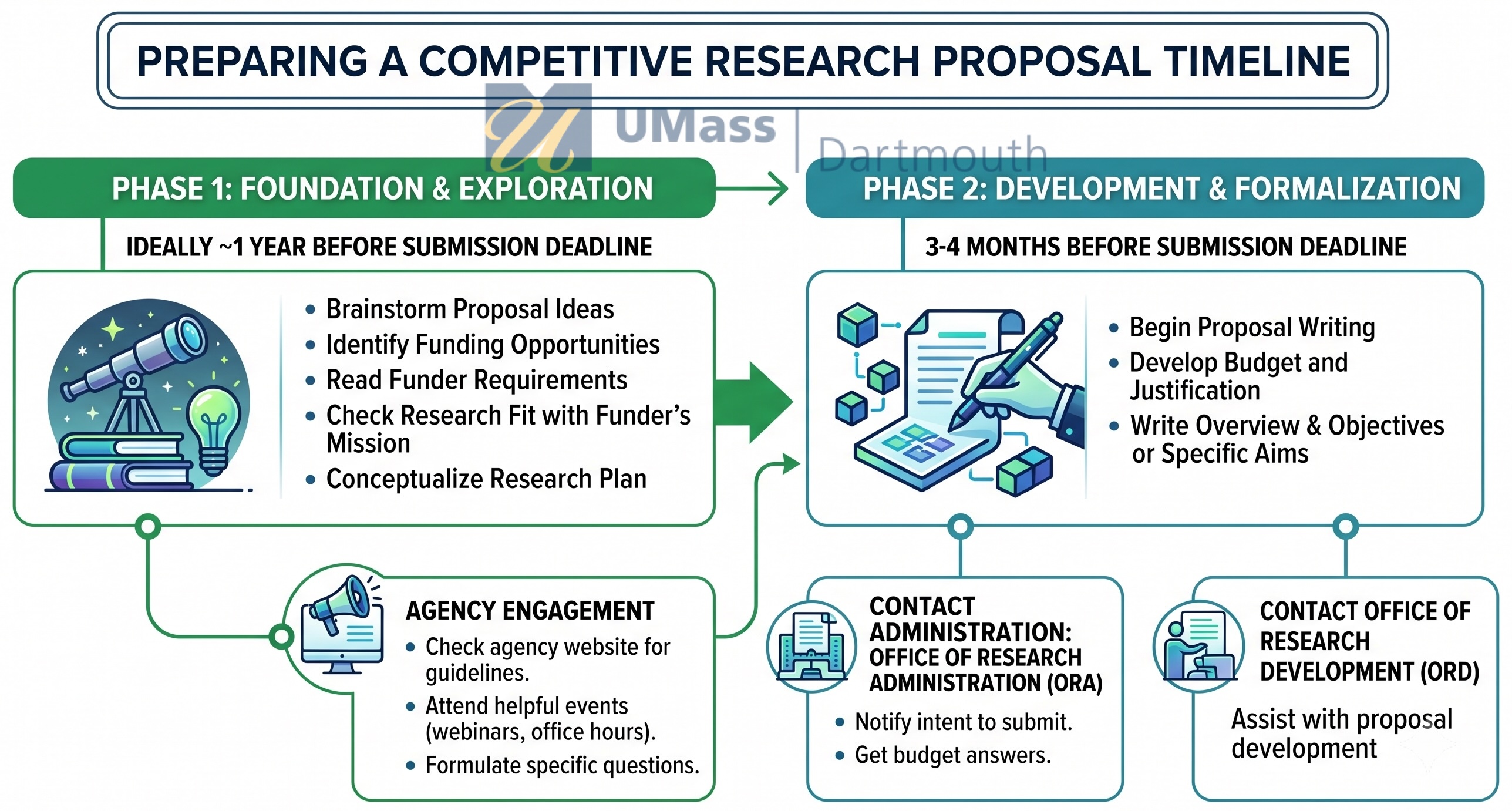
Figure 2.1 Proposal preparation timeline (image partially generated by Gemini). Infographic includes images for decoration only. Infographic includes UMass Dartmouth logo watermark.
Preparing a competitive research proposal timeline:
- Phase 1 - Foundation & exploration (ideally ~1 year before submission deadline
- Involves:
- brainstorm proposal ideas
- identify funding opportunities
- read funder requirements
- check research fit with Funder's missions
- conceptualize research plan
- Includes agency engagement
- check agency website for guidelines
- attend helpful events (webinars, office hours)
- formulate specific questions
- move onto phase 2
- Involves:
- Phase 2 - Development & formalization (3-4 months before submission deadline)
- Involves:
- degin proposal writing
- develop budget and justification
- write overview and objectives or specific aims
- Contact administration: Office of Research Administration (ORA)
- Notify intent to submit
- Get budget answers
- Contact Office of Research Development
- Assist with proposal development
- Involves:
3. Proposal Submission
Proposals for funding are submitted by the institution via an Authorized Representative and awarded to the University. You should not submit a proposal yourself unless explicitly instructed to do so by the Office of Research Administration. UMass Dartmouth uses a system-to-system software platform for proposal submission, along with other online portals as required by the funding agency. Check with your Pre-Award Manager when you give notification of intent to submit to determine which submission method is required for your proposal. You will work with the Pre-Award Manager to ensure that all required forms and documents are uploaded. Sponsors have a variety of deadlines; for example, some NSF programs have annual deadlines and others accept proposals at any time. Please read the funding opportunity announcement and guidelines carefully to be sure you are working to the correct deadline.
3.1 ORA deadlines for proposal submission
The Office of Research Administration (ORA) is UMass Dartmouth’s Authorized Representative for grants, contracts, and agreements related to research and sponsored projects. ORA reviews all proposals for compliance with the funding agency’s rules and regulations, as well as UMass Dartmouth’s policies.
At least three weeks prior to the submission deadline, please notify ORA of your intent to submit.
ORA recognizes that Investigators may need to revise their research plan and proposal close to the agency’s deadline, but early notification and submission of proposal documents is critical to allow for accurate review and a successful proposal submission. Please note that earlier notification is better, ideally as soon as a submission is contemplated. Please provide submission details such as RFP, BAA, etc. In addition, the following timeline applies.
Seven (7) business days prior to the submission deadline, please prepare a draft budget on ORA-approved template, and final subcontract documents signed by Authorized Official (where applicable).
Three (3) business days prior to the submission deadline, you are expected to have finalized your final budget and have uploaded your draft proposal documents the sponsor submission platform.
Two (2) business days prior to the submission deadline, you are expected to have finalized your proposal documents (approved by PI for submission to the sponsor) and have uploaded to the sponsor submission platform. Moreover, you are expected to have routed your final proposal to ORA and have sent ORA your signed Proposal Routing Form.
It’s critical to follow this timeline, depicted also in Figure 2.2. Any request for submission within 48 hours of the deadline will not be accepted unless approved by the Chief Research Officer. Approval will be granted only under exceptional circumstances.
During heavy submission periods (such as the NSF CAREER, MRI proposal cycles), ORA may issue revised internal deadlines to ensure that all proposals are provided a complete, quality review and submitted on time. If a revised schedule is needed, ORA will notify the PI well in advance.
When UMass Dartmouth is a subcontractor on a proposal submitted by another institution, the deadlines are calculated using the date that the subcontract documents are due to the submitting institution, not the deadline of the sponsoring agency.
Pre-Award Managers work closely with PIs to ensure proposals meet the highest standard of compliance. Utilizing a set of proposal review checklists, they review each proposal for compliance with the guidelines and policies of the sponsor and UMass Dartmouth. After the initial review, the Pre-Award Manager will e-mail corrections and suggested changes to the proposal for the PI’s consideration. A final review is completed after all necessary changes are made and the proposal is approved internally.
3.2 Signature and authorizations
All proposals to external sponsors seeking funding for research, service and training purposes must be routed through ORA for review and approval prior to submission to the sponsoring agency. Most proposals require a signature from an authorized official. The authorized officials for sponsored projects at UMass Dartmouth are the Chief Research Officer, the Director of Research Administration, and Pre-award Managers.
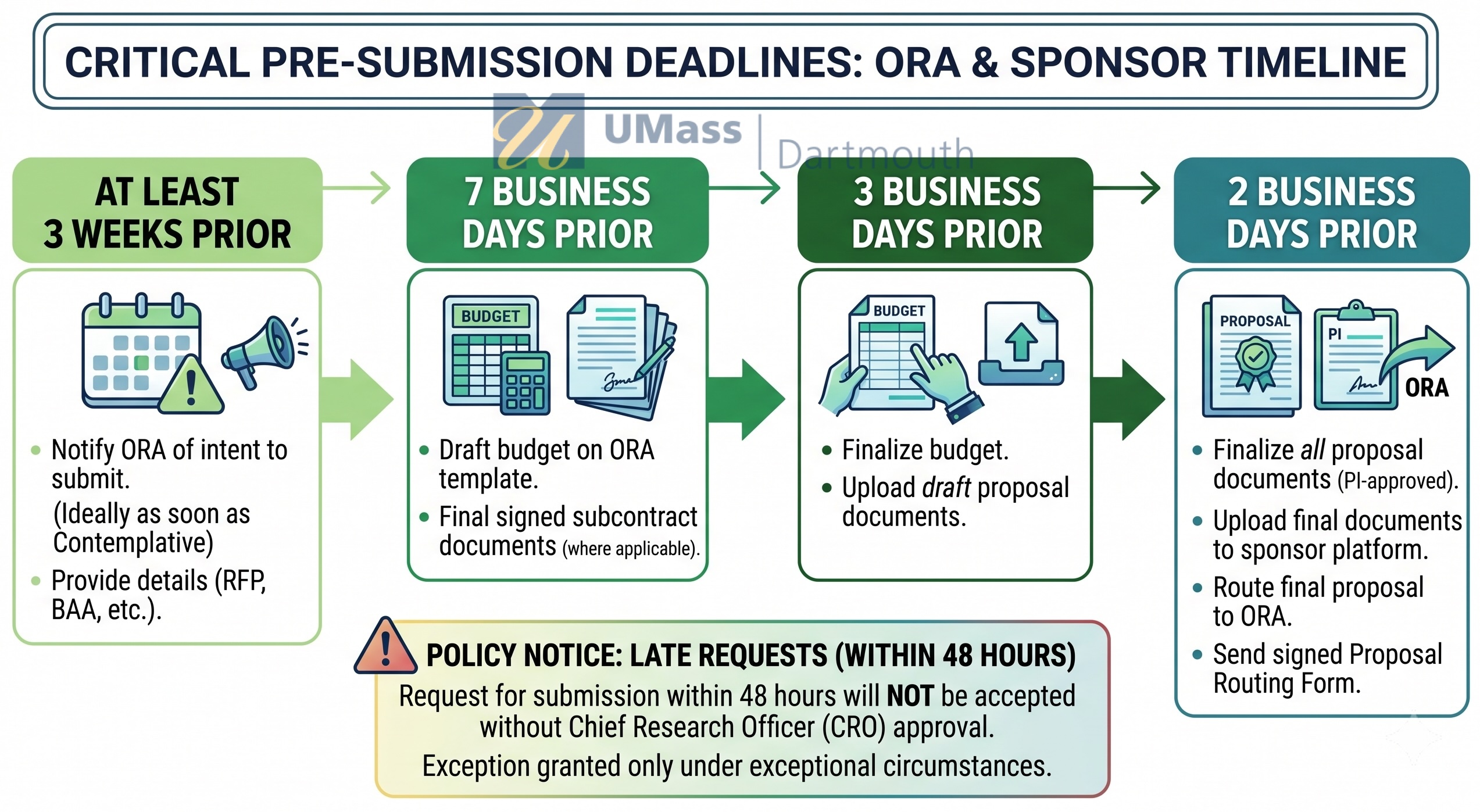
Figure 2.2: Proposal preparation timeline leading to submission (image partially generated by Gemini). Includes images used for decoration only. Infographic includes UMass Dartmouth logo watermark.
Critical pre-submission deadlines: ORA & sponsor timeline
- At least 3 weeks prior
- Notify ORA of intent to submit (Ideally as soon as Contemplative).
- Provide details (RFP, BAA, etc)
- 7 business days prior
- draft budget on ORA template
- final signed subcontract documents (where applicable)
- 3 business days prior
- finalize budget
- upload draft proposal documents
- 2 business days prior
- finalize all proposal documents (PI-approved)
- upload final documents to sponsor platform
- route final proposal to ORA
- send signed Proposal Routing Form
Policy notice: late requests (within 48 hours): Request for submission within 48 hours will not be accepted with Chief Research Officer (CRO) approval. Exception granted only under exceptional circumstances.
4. Sponsor review
4.1 Review types
Sponsors may use a variety of evaluation procedures, depending on the organization and their policies and procedures. Common review types are discussed below. Details on review and evaluation are typically given in the funding opportunity announcement and/or proposal guidelines.
4.2 Obtaining review comments
Review comments can be very informative and helpful, especially if your proposal was not funded and you would like to revise and submit again. Public sector funders routinely provide reviewer comments and the PI does not normally need to request this information. Private sector funders have varying policies on releasing reviewer comments. In many cases, reviewer comments will be provided if the funder receives a written request. If they have a policy against providing review comments, this is typically stated in their guidelines.
Table 2.4: Types of reviews
- Compliance review: Proposal applications may be rejected if they do not conform to page limits or font size. Some online submission platforms will not allow submission if page limits, font size, etc are nonconforming.
- Peer review: Most public sector funders (for example, NSF, NIH) use peer reviewers who are experts in the subject area, typically university faculty. Proposals are sent to the peer reviewers for evaluation and scoring according to a scoring rubric. Proposals are rank ordered according to score. Determinations on funding are made based on availability of the sponsor’s funds and their funding priorities
- Non-peer review: Some private sector organizations may use their own Board of Directors or internal review committee to evaluate proposals for funding. They usually provide detailed guidelines on the review criteria.
5. Negotiation and award acceptance
ORA Pre-Award Managers, in collaboration with the PI, are responsible for reviewing all terms and conditions of an award prior to accepting the award on behalf of the University. ORA Manager of Pre-Award Administration, the Director of Research Administration, and the Chief Research Officer have signature authority to execute award actions on behalf of the University.
Chapter 3 Post-award activities
1. Responsibilities in Post-Award Administration
The PI assumes primary responsibility for accomplishing the technical goals of the project and for complying with the financial and administrative policies and regulations associated with the award. Although PIs may have administrative staff to assist them with the management of project funds, the ultimate responsibility for the management of the sponsored research project activities and responsible expenditure of funds rests with the PI.
1.1 ORA Post-Award responsibilities
The office is responsible for the following
- Primarily, establish and maintain effective internal control over the award that provides reasonable assurance that the award is managed in compliance with Federal statutes, regulations, and the terms and conditions of the award;
- Establish the project/speedtype in the University financial system;
- Advise PIs regarding Federal and sponsor guidelines and regulations;
- Serve as the primary liaison between the PI and the sponsor in all areas requiring sponsor approval, including changes to scope, budget, key personnel, and project end dates;
- Maintain project files and records of the proposal and grants information system.
- Management of receivables, billings, and collections: ORA manages the collection of grant funds and maintains account records for each sponsor. ORA draws funds under Federal letters of credit as costs are incurred, issues billings to sponsors and conducts follow-upon payments;
- Project financial reporting: Preparation and submittal of financial reporting to sponsors will be conducted by ORA.
- Administer effort reporting in order to provide documentation for employee salary charges to Federal grants;
- Monitor and respond to, in conjunction with the department, incidents of overspending;
- Coordinate government, private sponsor, and public accounting firm audits;
- Develop and negotiate Federal facilities and administrative agreements;
1.2 PI Post-Award responsibilities
The PIs are responsible for the following:
- Execute the project as outlined in the funded proposal and the terms and conditions of the award using sound management techniques;
- Authorize only those expenditures that are reasonable and necessary to accomplish the project goals and are consistent with the sponsor’s terms and conditions;
- Spend no more than the authorized amount for the project period(s);
- Carry out the financial plan as described in funded proposal;
- Notify ORA of any proposed changes in scope of work, changes in personnel including the PI or other key persons, the budget, or period of performance;
- Follow all applicable University policies and procedures such as travel, purchasing, employment, contracted services, and compensation for personnel;
- Assure that cost-sharing or matching commitments are fulfilled and reported to ORA in a timely manner;
- Assure that Time and Effort Reports for the funded project are reported by the department in a state of accuracy, completeness, and timeliness;
- Oversee the care and maintenance of property procured with project funds in accordance with sponsor guidelines;
- Report any intellectual property development that results from the project to a sponsor.
- Prepare and submit periodic and final project progress reports in accordance with the terms of the award;
- Review project expenditures (including the monthly Project Financial Reports provided by ORA) to confirm that they are correct and appropriate;
- Comply with all sponsor and UMass Dartmouth rules, regulations, and terms and conditions of the award.
2. Charging expenses to accounts
PIs or other authorized project personnel initiate expense charges to a sponsored project. Expenditures must be consistent with grant requirements and purchasing procedures. UPST provides guidance on purchasing requirements and submitting invoices for payments.
2.1 Additional compensation
Federal cost accounting principles do not allow faculty to receive additional compensation during the academic year or period of appointment except under strict exceptions. Faculty are allowed to earn additional compensation during the summer months at a rate not to exceed 2.5 months of their academic year base salary. Additional compensation in excess of 2.5 months requires approval by the Provost, and/or the Office of Research Administration. Because work charged to a specific sponsored project must be specifically related to meeting the project’s goals and objectives during the summer, the University limits summer salary on grants to 95% of three months base salary. This allows the PI and other faculty to have time for other activities. The NSF further limits faculty salary charged to grants to two months during the calendar year unless specifically proposed at the time of application and included in the award budget. Faculty with a twelve-month appointment are not eligible. Additional compensation forms are sent to ORA for review. Review includes eligibility for additional compensation, including type of appointment, dollar and effort limitations.
2.2 Course buy-out
Externally funded buy-outs are provided to allow faculty additional time for research on externally sponsored projects. The salary, fringe, and indirect charges for the sponsored project must be based on the faculty member’s percentage of effort. External funds must provide 10% of the 9-month salary plus applicable fringe for a 3 TU (Teaching Unit) course buy-out. See the university course buy-out policy for more details and a Conversion Table of Teaching Units to the percentage of effort or salary to be charged.
The salary budget released by the course buy-out will first be used to pay for the replacement cost of instruction. The remaining funding will be distributed equally between the college dean and the department. On the course buy-out form, the department will provide a speed-type to which the salary savings are to be deposited. Based on this document, the department then uses the fund to cover the replacement instructional cost. Once a fully signed form is received, ORA completes a payroll transfer form to charge the grant for the effort and sends it to Payroll (along with a copy of the course buyout form) for processing. ORA then sends the completed course buyout form to the Provost’s Office Director of Academic Budget to coordinate the transfer the amount of salary funds that will be charged to the grant.
2.3 Internal institutional charges
Certain internal University services (computer services, library loans, telephone charges, etc.) may be electronically billed to a departmental account and charged to a sponsored research project if the speedtype is provided to the internal departments, and the expense is allowable on the sponsored project. The charges must be reviewed by the PI for accuracy.
2.4 Travel charges
Travel costs are the expenses for transportation, lodging, subsistence, and related items incurred by employees and non-employees who are in travel status on official business of the University.
PIs should familiarize themselves with the UMass Dartmouth Travel and Expense Policy.
PIs should include all expected travel expenses in the proposal budget and budget justification. Distinguishing and separating costs for domestic versus international travel is required.
- Travel must have a legitimate business purpose and meet all the elements of allowability (i.e., necessary/reasonable, allocable, consistently treated, and not specifically disallowed by the sponsor or program).
- Employees must travel by the most direct route and use the most economical mode of transportation available considering travel time, costs, and work requirements. For Federal or Federal pass-thru funded sponsored projects, air transportation to, from, between, or within a country other than the United States must be by a US flag air carrier if such service is available. Refer to the Fly America Act.
- Travelers may choose to submit either the federal per diem amounts or actual incurred expenses up to the federal per diem amount. The same method of reimbursement (federal per diem rates or actuals up to the federal per diem rate) must be used for the entire trip; Travelers may not request reimbursement of actual expenses for one portion of a trip and per diem for the remainder. The first and last calendar day of travel will be reimbursed at 75% of the respective per diem rate as noted in the federal per diem schedule. If a meal is provided on the first or last day of travel, the 75% per diem rate is calculated first, and the per diem amount for the meal provided is then subtracted from the 75% per diem rate. Day trips of less than twelve (12) hours of travel time do not qualify for per diem rate reimbursement.
Examples of typically allowable and unallowable travel expenses are provided in Table 3.1. If project staff are paid 100% on one sponsored project, their travel should not be reimbursed on another sponsored project. Documentation must be maintained for all expenses incurred while in travel status on a sponsored project.
Table 3.1: Typically allowable and unallowable travel expenses.
| Allowable travel expenses | Unallowable travel expenses |
|---|---|
| Economy coach airfare | First class & business class airfare |
| Travel agent & airline baggage fees | Upgrades & ticket change fees for personal convenience |
| Car rental, including gas | Optional damage waiver for domestic travel |
| Mileage for personal vehicles | Parking tickets or traffic fines |
| Ground transit: shuttle, train, taxi, bus fares | Rental car for personal use |
| Lodging | Late checkout, room guarantee & no-show hotel fees, entertainment (movies, sightseeing tours, mini-bar charges/meals) |
| Conference registration fees | Late registration or cancellation fees |
| Per diem | Actual cost of meals purchases |
| Tolls, parking & reasonable tips | Hotel, in-flight internet access |
| Short-term travel visas | passports & immigration visas |
Table 3.1: Types of equipment.
General purpose equipment: Equipment not limited to research, scientific, or other technical activities. This is not normally allowed as a direct charge on sponsored projects unless the equipment is primarily or exclusively used in the actual conduct of the project and with prior written sponsor approval. Examples:
- office equipment and furnishings
- modular offices
- telephone networks
- information technology equipment and systems
- air conditioning equipment
- reproduction and printing equipment
- motor vehicles.
Special purpose equipment:
Equipment used only for research, scientific, or other technical activities. Special purpose equipment may be allowable as a direct cost if items with a unit cost of $5,000 or more have the prior approval of the awarding sponsor. Examples:
- microscopes
- x-ray machines
- spectrometers
Fabricated equipment: An item fabricated or made within the University for which the total cost of component parts and materials/supplies (not labor) is $5,000 or more, costs are documented and accounted for by the unit, and item otherwise satisfies the University’s definition of equipment.
2.5 Publication costs
Publication costs for electronic and print media, including distribution, promotion, and general handling are allowable. Publication costs are those costs that make available the findings and products of the project and include activities such as documenting, preparing and publishing (e.g. reports, reprints, page charges or other journal costs (except costs for prior or early publication); necessary illustrations; cleanup, documentation, storage and indexing of data and databases; development, documentation and debugging of software; and storage, preservation, documentation, indexing, etc., of physical specimens, collections or fabricated items).
Publication costs may be charged to an award during closeout for the costs of publication or sharing of research results if the costs are not incurred during the period of performance of the award. If charged to the award, these costs must be charged to the final budget period of the award, unless otherwise specified by the Federal awarding agency.
2.6 Equipment
The University inventories all property and equipment that, in general, has a useful life of more than one year and a unit value equal to or greater than $5,000. Table 3.2 specifies the three types of equipment.
- Per the Uniform Guidance, in the specific case of computing devices, charging as direct costs is allowable for devices that are essential and allocable, but not solely dedicated, to the performance of a sponsored project.
- Intended equipment purchases and fabrications should be included in sponsored project budget and budget justification. The terms and conditions of the sponsored project will dictate the allowability of equipment charges. Prior sponsor approval may be required.
- If a piece of equipment is purchased to support multiple projects, or to support both sponsored and unsponsored activity, be sure to adequately document the allocation of the cost. This documentation may be requested by ORA.
- Title to equipment purchased with sponsored project funds generally vests in the University, unless otherwise stated in the sponsored project agreement. If a federal sponsor retains title to the equipment, it must be solely funded by the awarding Federal sponsor. Partial funding from a university account is permitted if title to the equipment vests in the University without further obligation to the sponsor.
- Equipment purchased during the last six months of a project may be subject to additional scrutiny and approval.
2.7 Subawards
When the University is the recipient of a prime award, the collaborating institutions that are engaged by the University to participate in carrying out a portion of the project’s scope of work and then receive funding from the prime award are known as subrecipients. The award the University issues to the subrecipient is referred to as the subaward and is processed by ORA.
Prior to submission to ORA, it is critical to identify if the collaborating institution will be identified as a subrecipient or a contractor. ORA utilizes the following definitions:
- Subrecipient: an entity that receives a subaward with an expectation that they will be carrying out a portion of a project or program.
- Contractor: an entity that receives a contract with the expectation that we are procuring property or services needed to carry out a project or program.
When it has been determined that a subrecipient will be included in a sponsored project, the following subrecipient documentation should be incorporated into the proposal sent to ORA for review and submission to the funding agency.
- Scope of Work (SOW): the who, what, when, why and how the project will be performed by the subrecipient. It should include a statement of the problem, the methods that will be used to conduct the research, and the deliverables/milestones identified for the subaward.
- Budget and budget justification: the budget is the financial plan for the subaward. Proposed project costs should include allowable direct costs, facilities and administrative (F&A) costs, and cost sharing (if applicable). A budget justification should explain how the budgeted costs relate to the project. The justification should provide sufficient detail to determine whether the proposed costs are reasonable and appropriate. Administrative approval from the subrecipient organization is needed for the budget and justification. It is also recommended that the University PI confirms the budget matches the proposed work and supports the scope of the project.
- Letter of intent with authorized signature from the subrecipient: ORA has a sample LOI that can be provided.
2.8 Cost transfers
A cost transfer is a reallocation or redistribution of a previously charged expenditure transferred from one University fund to another fund after the charge has been posted.
It is the policy of the University that costs should be charged to the appropriate sponsored project when first incurred. There are circumstances in which it may be necessary to initiate a cost transfer to reallocate or redistribute expenditures to a sponsored project after the initial recording of the charge. Sponsored project cost transfers should be initiated promptly and supported by documentation justifying the transfer. For cost transfers to be allowable, the expense must be:
- an allowable charge to the project as defined by university policy, sponsor’s policy, and the terms and conditions of the award;
- allocable as a direct charge to the project and provide a benefit to the project;
- consistently treated across like circumstances;
- reasonable and necessary.
Principal Investigators (PIs) are responsible for managing their sponsored projects to minimize the need for cost transfers. PIs are also responsible for ensuring that when cost transfers are necessary, the costs transferred to (or between) their sponsored projects represent appropriate corrections of errors, and that cost transfers are completed as soon as the errors are identified. PIs should work with their administrative assistants to ensure that sponsored project cost transfers are:
- Initiated promptly and supported by documentation justifying the transfer.
- Submitted within 90 calendar days of the original transaction date. Non-current cost transfers are those processed more than 90 calendar days after the original transaction date and require additional documentation. Inappropriate cost transfers and inadequate control systems may result in expenditures being disallowed and may also cause the sponsoring agency to impose additional restrictions or to reduce subsequent funding. Examples that may lead to such penalties include: Frequent cost transfers, Non-current cost transfers, or Inadequately documented or insufficiently explained transfers, especially those which involve sponsored projects with overruns or unexpended balances.
3. Time and Effort Reporting
Effort reporting is required by the Uniform Guidance, Section 200.430. Effort reporting is a method of documenting the time devoted to an externally sponsored grant or contract and is expressed as a percentage of professional activity devoted to a particular project.
All individuals who devote effort to grants or contracts, whether they receive pay or not, are subject to effort reporting. Federal regulations require UMass Dartmouth to have a system in place for certifying the allocation of salaries and wages associated with sponsored agreements. UMass Dartmouth employs after-the-fact certification to confirm that the activity of an employee supports the compensation charged to Federal awards. All employees who perform work on federally funded sponsored projects must certify their effort annually. Please see further guidelines.
Each person must provide a reasonable estimate of the time actually spent working on the project. PIs are responsible for reviewing all time and effort reports to ensure accurate accounting of their own effort and that of their staff. PIs are also responsible for complying with sponsor requirements for notifications regarding changes in personnel and effort and must ensure that commitments of effort to the project are met according to the timeline and guidelines of the sponsor. ORA provides training to PIs and their research staff on UMass Dartmouth’s process for effort reporting. When assessing percentage of activity expended on a sponsored project, “total effort” is defined as actual effort devoted to all the activities for which UMass Dartmouth compensates an employee for their appointment. For faculty, total effort includes instructional activities, administrative activities, public services, and clinical and research activities. The Federal government guidelines acknowledge that in an academic setting, teaching, research, services, and administration are often inextricably intermingled. A precise assessment of factors that contribute to costs is not always feasible, nor is it expected. Reliance is placed on estimates, however, the percentage of compensation charged to a Federal award during a reporting period can never exceed the percentage of total effort associated with the award.
4. Budget Revision and Reallocation of Funds
PIs should begin by contacting ORA to determine whether budget revisions or reallocation of funds is authorized under the award and/or whether these actions require a sponsor’s prior approval. Some sponsors do not allow revisions or allocations while some impose limits for changes (for example, some sponsors require prior approval for changes of more than 25%). The PI should assess the impacts of revision or reallocation to determine if there will be sufficient funds to complete the project activities or whether F&A costs will be impacted. Prior Approvals. In an effort to streamline post-award administration of changes from the approved application or budget, many Federal agencies have delegated authority to institutions to approve certain post-award changes. In exercising this authority, ORA grantees must assure proper stewardship over these funds and that all costs charged to the awards are allowable, allocable, and reasonable.
5. Sponsored project closeout
It is the responsibility of the University to close out completed sponsored projects in compliance with Federal regulations, sponsor policy, and award terms and conditions.
Uniform Guidance requires that final financial, progress, technical, and other reports be submitted within 120 calendar days after the project end date. If sponsor policy or specific award terms and conditions prescribe otherwise, such policy or terms and conditions shall prevail. Non-compliance with sponsored project closeout requirements has adverse consequences for the University including, but not limited to, forfeiture of final payment, delayed or reduced future funding, less favorable award terms and conditions, and audit finding risks. Sponsored project closeout is the shared responsibility of the PI and ORA.
Monthly review and reconciliation of expenditures throughout the life of the sponsored project facilitates the project closeout within the required timeframe. During the period of performance of the sponsored project, the PI is responsible for:
- Reviewing monthly financial reports to ensure that all expenses charged are allowable. The PI should request timely corrections for any cost deemed unallowable for any reason, including posting errors.
- Monitoring that all required cost share is accurately tracked and reported. Before the sponsored project ends, the PI is responsible for:
- Ensuring that all appropriate charges have posted to the project.
- Determining whether the project will end with an unexpended balance and reviewing terms and conditions of the award regarding treatment of such a balance.
- Informing ORA if the project is going to be extended or continued. After the sponsored project ends, the PI is responsible for:
- Reviewing and ensuring that all charges posted to the project are allowable.
- If applicable, confirming that all subrecipients have completed their scope of work, including all required deliverables, and submitted their final billing according to the terms of the subaward.
- Preparing and submitting the final technical report and/or deliverables to the sponsor.
Chapter 4 Appendices
1. Appendix A: PI onboarding checklist and top 10 pitfalls
A.1 New PI 90-Day onboarding checklist
To ensure a smooth transition and establish a strong foundation for your sponsored research, please complete the following steps within your first 90 days:
- Complete PI training: Ensure all mandatory institutional research training is completed. Google “UMassD CITI training”.
- Meet assigned pre-award contact: Connect with the Office of Research Administration (ORA) to identify your dedicated pre-award support.
- Establish GrantForward account: Register using your UMass Dartmouth credentials to begin searching for funding opportunities.
- Review indirect cost policy: Familiarize yourself with the institutional Facilities and Administrative (F&A) rate and relevant policy, ACA-023 and ACA-027.
- Complete COI disclosures: Submit your required Conflict of Interest disclosures via Kuali.
- Complete IRB/IACUC training (if needed): Complete appropriate compliance training, by contacting the relevant committee, if your research involves human subjects or animals.
- Review effort reporting expectations: Understand your responsibilities for accurately tracking and certifying time spent on sponsored projects.
- Schedule research development consultation: Meet with the Office of Research Development to discuss your funding strategy and proposal timeline.
A.2 Top 10 PI pitfalls to avoid across the lifecycle
Avoiding these common administrative and compliance mistakes will help ensure your research remains funded, compliant, and operationally smooth:
- Late submissions: Submitting proposal materials too late, missing internal ORA deadlines and jeopardizing a successful sponsor submission.
- Expired project charges: Charging expenses to a grant after the official award expiration date.
- Late equipment purchases: Purchasing equipment in the final months of the grant without explicit prior justification and sponsor approval.
- Voluntary cost share: Committing to a voluntary cost share, which legally binds institutional funds unnecessarily.
- Account errors: Charging the wrong account, thereby requiring administrative cost transfers (which trigger audit scrutiny).
- Unauthorized hiring: Hiring personnel or research assistants before official approvals nd funding accounts are established.
- Missed certifications: Missing federal effort reporting deadlines.
- Compliance lapses: Forgetting annual IRB or IACUC renewals, which forces a halt to all related research activities.
- Unauthorized budget changes: Making structural budget reallocations that require prior sponsor approval.
- Late reporting: Delayed submission of technical or financial reports, which can result in the sponsor withholding future funding for the entire institution.
2. Appendix B: research data management and sharing
1. Data ownership and stewardship
- Institutional ownership: In alignment with standard sponsored research policy, all research data generated through activities funded by external sponsors or utilizing significantUniversity resources are owned by the University of Massachusetts Dartmouth.
- PI stewardship: The Principal Investigator (PI) serves as the primary custodian of the research data, assuming day-to-day responsibility for data collection, integrity, retention, and dissemination in compliance with sponsor agreements.
2. Data storage, security, and cloud services
- Storage protocols: All primary research data, metadata, and laboratory records must be stored on centrally managed, backed-up institutional systems.
- Sensitive & regulated data: Research involving Personally Identifiable Information (PII), Protected Health Information (PHI), or export-controlled information must reside on access-restricted, encrypted systems approved by IT Infrastructure and Institutional Ethics and Compliance.
- Cloud services: Only enterprise-level, University-vetted cloud platforms (e.g., UMasslicensed OneDrive, or secure institutional high-performance computing storage) may be used.
3. Retention periods
- Standard retention: Research records and underlying data must be retained for a minimum of three (3) years following the submission of the final financial report and formal project closeout, unless a longer retention period is mandated by the sponsor or specific state/federal regulations.
- Audit and dispute holds: If litigation, claims, or audits are initiated prior to the expiration of the standard retention period, all associated records and data must be maintained until all issues are fully resolved.
4. Public access, sharing, and institutional repositories
- Sponsor sharing mandates: PIs must comply with public access mandates (e.g., NIH Data Management and Sharing Policy, NSF Public Access Plan). Data sharing plans detailed in funded proposals are binding commitments.
- Data repositories: Data sets supporting published findings must be deposited into recognized discipline-specific repositories, generalist data archives, or the University’s designated institutional repository with persistent digital object identifiers (DOIs) assigned.
3. Appendix C: preliminary guidelines on the use of AI in research0
1. General principles
Generative AI and machine learning tools offer powerful capabilities to enhance scholarly inquiry; however, their use must remain strictly grounded in research integrity, confidentiality, and sponsor compliance. The PI remains fully accountable for the accuracy, originality, and ethical adherence of all submitted proposals, publications, and deliverables.
2. Proposal writing and preparation
- Permissibility: AI tools may be used to assist with brainstorming, drafting literature syntheses, copyediting, and refining narrative structure.
- Factual integrity & plagiarism: Generative AI outputs are prone to fabrications (“hallucinations”) and false citations. PIs are strictly responsible for verifying every citation, technical claim, and figure. Submitting AI-generated text without verification or presenting uncredited AI-generated narrative as original scholarly insight may violate research misconduct policies.
- Confidentiality during peer review: PIs and co-investigators serving as peer reviewers for federal agencies (e.g., NSF, NIH) are strictly prohibited by federal policy from uploading grant applications or proprietary manuscripts into generative AI systems.
3. Data analysis and code generation
- Data processing: AI algorithms and scripts may be utilized to analyze data sets, automate workflows, and interpret results, provided the analytical methodology is rigorously documented, reproducible, and scientifically validated.
- Data privacy restrictions: Do not upload unpublished, proprietary, confidential, human subject, or export-controlled data into public AI models. Doing so constitutes a public disclosure and a breach of data privacy protocols. Only institutionally vetted, private AI instances with data-protection agreements may process non-public research data.
- Code generation: Generating, optimizing, and debugging code using AI platforms is permitted. PIs must validate code for security vulnerabilities, intellectual property infringements, and algorithmic accuracy prior to deployment.
4. Disclosures and transparency
- Sponsor-specific disclosures: PIs must follow specific funding agency disclosure requirements regarding the use of generative AI in proposal preparation or proposed project execution.
- Publications: When publishing research developed with generative AI assistance, authors must transparently disclose the specific tools used and their operational role in the methodology or acknowledgments section, in accordance with publisher and journal standards.
0This guidance is preliminary and as of August 2026, subject to change without notice, and not intended to be a comprehensive or exhaustive guide. Given the rapidly evolving regulatory landscape, it is the primary responsibility of the Principal Investigator (PI) to remain informed of and adhere to all agency-specific, program-level, and publisher restrictions regarding the use of AI. The Office of Research and Innovation (ORI) will make every effort to monitor, track, and keep the campus community updated on emerging sponsor guidelines.