BioSafety Manual
(Revised June 25, 2018)
1. Introduction and purpose
The University of Massachusetts Dartmouth (UMD) Biosafety Manual contains policies, procedures, and guidelines for the safe handling and containment of biohazardous agents at UMD. The Director of EH&S/Senior Biosafety Officer is responsible for the Biological Safety Program at the University. The institution also has an Institutional Biosafety Committee that meets periodically to review research proposals and other activities involving potentially biohazardous agents. U.S. agencies that oversee and control the use of biological agents include the Centers for Disease Control (CDC), the National Institutes of Health (NIH), the Department of Labor Standards (DLS), the Massachusetts Department of Public Health, and the Department of Public Health for the Town of Dartmouth, MA. The CDC-NIH 5th Edition of Biosafety in Microbiological and Biomedical Laboratories(BMBL) includes what are widely considered to be the minimum safe guidelines for proper biosafety practices and procedures and is a key reference for the UMD Biosafety Program. Biosafety assistance can be obtained from the UMD Environmental Health and Safety Department at x8176. Questions about the Biosafety Program can be referred to Robert Casparius, Director of EH&S.
2. Responsibilities
The following responsibilities are to be assumed by each of the parties/individuals described below. Any deviations from, or modifications of these assigned responsibilities should be discussed with the Biosafety Officer and IBC.
a. Institutional Biosafety Committee
- Hold period meetings as determined by the Committee members or Committee Chair to discuss relevant issues.
- Provide guidance to the Biosafety Program as determined by the Biosafety Officer on relevant biosafety issues (i.e. policy, procedures, Biosafety Manual, etc.).
- Monitor compliance with this Manual and all applicable government regulations.
- Document meeting Agendas and actions taken at each meeting v. Review research protocols involving pathogenic/infectious agents, rDNA, genetically-modified organisms (GMOs), human blood and other potentially infectious materials (OPIM) and approve or disapprove research protocols as appropriate.
- Recommend biosafety or animal biosafety levels for approved protocols.
- Review any incidents involving potentially university officials an/or governmental agency.
b. Professor/Principal Investigator
- Establish and maintain appropriate practices and procedures that support compliance with this Manual, including:
- Access restrictions and security for laboratory
- Labeling and signage
- Storage of organisms
- Waste disposal
- Shipping and receiving
- Training
- Register each relevant research project with and update changes in research projects with the IBC.
- Instruct affected researchers, technicians, students and other subordinates in proper operational policies, procedures, practices, and techniques as outlined in this manual when handling biohazardous materials.
- Report all actual or suspected work-related illnesses, injuries, and/or infections sustained by you or subordinates to Environmental Health & Safety.
- Submit updated research protocol to IBC every two years.
c. Research Staff and students
- Be familiar with the requirements of this manual.
- Be familiar with required biosafety practices and procedures
- Take personal responsibility for attending required biosafety training sessions and follow all biosafety policies and procedures to minimize exposure risk.
- Conduct all experiments using the proper practices and procedures.
- Report occupational exposure incidents to the Biosafety Officer and The Professor/Principal Investigator.
- Report all exposure to potentially infectious agents to the Biosafety Officer and the Professor/Principal Investigator.
d. Environmental Health and Safety
- Communicate, implement and enforce programs, policies and procedures promulgated as part of the UMD Biosafety Program.
- Work with the IBC on issues of biosafety, biohazardous and infectious materials and compliance with federal, state, local and University requirements and regulations.
- Coordinate and conduct appropriate biosafety training for the Professor/Principal Investigator and all research staff using biohazardous materials and maintain training records.
- Provide technical advice to Professors/Principal Investigators and the IBC on research safety procedures.
- Inspect laboratories for compliance with biosafety practices, procedures and standards.
- Recommend suspension of any operation involving biohazardous materials conducted in violation of approved IBC protocols. Permit resumption of modified operations only after re-approval by the IBC.
- Develop emergency plans for investigating and cleanup of accidental spills and personnel contamination.
- Track and trend needle stick injury occurrences. Work with users and PIs to identify techniques and equipment to minimize the likelihood of needle sticks.
3. Hazardous characteristics of an agent
- The principal hazardous characteristics of an agent are: its capability to infect and cause disease in a susceptible human or animal host, its virulence as measured by the severity of disease, and the availability of preventive measures and effective treatments for the disease.
- Other hazardous characteristics of an agent include probable routes of transmission of laboratory infection, infective dose, stability in the environment, host range, and its endemic nature.
- The predominant probable routes of transmission in the laboratory are:
- direct skin, eye or mucosal membrane exposure to an agent;
- parenteral inoculation by a syringe needle or other contaminated sharp, or by bites from infected animals and arthropod vectors;
- ingestion of liquid suspension of an infectious agent, or by contaminated hand to mouth exposure; and iv. inhalation of infectious aerosols.
- An awareness of the routes of transmission for the natural human disease is helpful in identifying probable routes of transmission in the laboratory and the potential for any risk to the public health.
4. Hazardous characteristics of laboratory procedures
- Investigations of LAIs have identified five principal routes of laboratory transmission. These are parenteral inoculations with syringe needles or other contaminated sharps, spills and splashes onto skin and mucous membranes, ingestion through mouth pipetting, animal bites and scratches, and inhalation exposures to infectious aerosols. The first four routes of laboratory transmission are easy to detect, but account for less than 20 percent of all reported LAIs.
- Aerosols are a serious hazard because they are ubiquitous in laboratory procedures, are usually undetected, and are extremely pervasive, placing the laboratory worker carrying out the procedure and other persons in the laboratory at risk of infection.
- Procedures that impart energy to a microbial suspension will produce aerosols. Procedures and equipment used routinely for handling infectious agents in laboratories, such as pipetting, blenders, non-self contained centrifuges, sonicators and vortex mixers are proven sources of aerosols. These procedures and equipment generate respirable-size particles that remain airborne for protracted periods. When inhaled, these particles are retained in the lungs creating an exposure hazard for the person performing the operation, coworkers in the laboratory, and a potential hazard for persons occupying adjacent spaces open to air flow from the laboratory.
5. Potential hazards associated with work practices, safety equipment and facility safeguards
- Training, experience, knowledge of the agent and procedure hazards, good habits, caution, attentiveness, and concern for the health of coworkers are prerequisites for a laboratory staff in order to reduce the inherent risks that attend work with hazardous agents.
- There may be hazards that require specialized personal protective equipment in addition to safety glasses, laboratory gowns, and gloves.
- Safety equipment such as biological safety cabinets (BSC), centrifuge safety cups, and sealed rotors are used to provide a high degree of protection for the laboratory worker from exposure to microbial aerosols and droplets. Safety equipment that is not working properly is hazardous, especially when the user is unaware of the malfunction. Poor location, room air currents, decreased airflow, leaking filters, raised sashes, crowded work surfaces, and poor user technique compromise the containment capability of a BSC.
6. Risk assessment
- Determine the necessary safety requirements for the biological agent that you will using in your research. This can be done by referring to the BMBL, which provides guidance for a number of agents commonly researched. In addition, the Canadians have the equivalent of Safety Data Sheets (SDS) for common biological agents that can be accessed on the internet. If that does not prove successful contact the BioSafety Officer for assistance.
- Next consider the activities involved in this research. Will the research involve generating aerosols, be used in animals, etc. Some research activities can make the difference between on Biosafety Level and one higher. Consider implementing the necessary safety requirements for these activities as described in section 7.
- In conducting a risk assessment, the laboratory director or principal investigator should ensure that laboratory workers have acquired the technical proficiency in the use of microbiological practices and safety equipment required for the safe handling of the agent, and have developed good habits that sustain excellence in the performance of those practices.
7. BioSafety levels and the BMBL
a. BSL-1
Biosafety Level 1 is suitable for work involving well-characterized agents not known to consistently cause disease in immunocompetent adult humans, and present minimal potential hazard to laboratory personnel and the environment. BSL-1 laboratories are not necessarily separated from the general traffic patterns in the building. Work is typically conducted on open bench tops using standard microbiological practices. Special containment equipment or facility design is not required, but may be used as determined by appropriate risk assessment.
Laboratory personnel must have specific training in the procedures conducted in the laboratory and must be supervised by a scientist with training in microbiology or a related science. The following standard practices, safety equipment, and facility requirements apply to BSL-1.
- Standard Microbiological Practices
- The laboratory supervisor must enforce the institutional policies that control access to the laboratory.
- Personas must wash their hands after working with potentially hazardous materials and before leaving the laboratory.
- Eating, drinking, smoking, handling contact lenses, applying cosmetics, and storing food for human consumption must not be permitted in laboratory areas. Food must be stored outside the laboratory area in cabinets or refrigerators designated and used for this purpose.
- Mouth pipetting is prohibited; mechanical pipetting devices must be used.
- Special Practices: None required
- Safety Equipment
- Special containment devices or equipment, such as BSCs, are not generally required.
- Protective laboratory coats, gowns, or uniforms are recommended to prevent contamination of personal clothing.
- Wear protective eyewear when conducting procedures that have the potential to create splashes of microorganisms or other hazardous materials. Persons who wear contact lenses in laboratories should also wear eye protection.
- Gloves must be worn to protect hands from exposure to hazardous materials. Glove selection should be based on an appropriate risk assessment. Alternatives to latex gloves should be available. Wash hands prior to leaving the laboratory. In addition, BSL-1 workers should:
- Change gloves when contaminated, glove integrity is compromised, or when otherwise necessary.
- Remove gloves and wash hands when work with hazardous materials has been completed and before leaving the laboratory.
- Do not wash or reuse disposable gloves. Dispose of used gloves with other contaminated laboratory waste. Hand washing protocols must be rigorously followed.
- Laboratory Facility
- Laboratories should have doors for access control.
- Laboratories must have a sink for hand washing.
- The laboratory should be designed so that it can be easily cleaned. Carpets and rugs in laboratories are not appropriate.
- Laboratory furniture must be capable of supporting anticipated loads and uses. Spaces between benches, cabinets, and equipment should be accessible for cleaning.
- Bench tops must be impervious to water and resistant to heat, organic solvents, acids, alkalis, and other chemicals.
- Chairs used in laboratory work must be covered with a non-porous material that can be easily cleaned and decontaminated with appropriate disinfectant.
- Laboratories windows that open to the exterior should be fitted with screens.
b. Difference between BSL-1 and BSL-2
- Laboratory personnel are required to have specific training in handling pathogenic agents and are supervised by their Principal Investigator/Professor or other competent researcher in handling infection agents and associated procedure,
- The access to the laboratory is restricted when work is being conducted with the BSL-2 agent, and
- All procedures in which infectious aerosols or splashes may be created are conducted in a Biosafety Cabinet or other physical containment equipment.
c. BSL-2
Biosafety Level 2 builds upon BSL-1. BSL-2 is suitable for work involving agents that pose moderate hazards to personnel and the environment. It differs from BSL-1 in that: 1) laboratory personnel have specific training in handling pathogenic agents and are supervised by scientists competent in handling infectious agents and associated procedures; 2) access to the laboratory is restricted when work is being conducted; and 3) all procedures in which infectious aerosols or splashes may be created are conducted in BSCs or other physical containment equipment. The following standard and special practices, safety equipment, and facility requirements apply to BSL-2.
- Standard Microbiological Practices
- The laboratory supervisor must enforce the institutional policies that control access to the laboratory.
- Persons must wash their hands after working with potentially hazardous materials and before leaving the laboratory.
- Eating, drinking, smoking, handling contact lenses, applying cosmetics, and storing food for human consumption must not be permitted in laboratory areas. Food must be stored outside the laboratory area in cabinets or refrigerators designated and used for this purpose.
- Mouth pipetting is prohibited; mechanical pipetting devices must be used.
- Policies for the safe handling of sharps, such as needles, scalpels, pipettes, and broken glassware must be developed and implemented. Whenever practical, laboratory supervisors should adopt improved engineering and work practice controls that reduce risk of sharps injuries. Precautions, including those listed below, must always be taken with sharp items. These include:
- Careful management of needles and other sharps are of primary importance. Needles must not be bent, sheared, broken, recapped, removed from disposable syringes, or otherwise manipulated by hand before disposal.
- Used disposable needles and syringes must be carefully placed in conveniently located puncture-resistant containers used for sharps disposal.
- Non-disposable sharps must be placed in a hard walled container for transport to a processing area for decontamination, preferably by autoclaving.
- Broken glassware must not be handled directly. Instead, it must be removed using a brush and dustpan, tongs, or forceps. Plastic ware should be substituted for glassware whenever possible.
- Perform all procedures to minimize the creation of splashes and/or aerosols.
- Decontaminate work surfaces after completion of work and after any spill or splash of potentially infectious material with appropriate disinfectant.
- Decontaminate all cultures, stocks, and other potentially infectious materials before disposal using an effective method. Depending on where the decontamination will be performed, the following methods should be used prior to transport:
- Materials to be decontaminated outside of the immediate laboratory must be placed in a durable, leak proof container and secured for transport.
- Materials to be removed from the facility for decontamination must be packed in accordance with applicable local, state, and federal regulations.
- A sign incorporating the universal biohazard symbol must be posted at the entrance to the laboratory when infectious agents are present. Posted information must include: the laboratory’s biosafety level, the supervisor’s name (or other responsible personnel), telephone number, and required procedures for entering and exiting the laboratory. Agent information should be posted in accordance with the institutional policy.
- An effective integrated pest management program is required.
- The laboratory supervisor must ensure that laboratory personnel receive appropriate training regarding their duties, the necessary precautions to prevent exposures, and exposure evaluation procedures. Personnel must receive annual updates or additional training when procedural or policy changes occur. Personal health status may impact an individual’s susceptibility to infection, ability to receive immunizations or prophylactic interventions. Therefore, all laboratory personnel and particularly women of childbearing age should be provided with information regarding immune competence and conditions that may predispose them to infection. Individuals having these conditions should be encouraged to self-identify to the institution’s healthcare provider for appropriate counseling and guidance.
- Special practices
- All persons entering the laboratory must be advised of the potential hazards and meet specific entry/exit requirements.
- Laboratory personnel must be provided medical surveillance, as appropriate, and offered available immunizations for agents handled or potentially present in the laboratory.
- Each institution should consider the need for collection and storage of serum samples from at-risk personnel.
- A laboratory-specific biosafety manual must be prepared and adopted as policy. The biosafety manual must be available and accessible.
- The laboratory supervisor must ensure that laboratory personnel demonstrate proficiency in standard and special microbiological practices before working with BSL-2 agents.
- Potentially infectious materials must be placed in a durable, leak proof container during collection, handling, processing, storage, or transport within a facility.
- Laboratory equipment should be routinely decontaminated, as well as, after spills, splashes, or other potential contamination.
- Laboratory equipment should be routinely decontaminated, as well as, after spills, splashes, or other potential contamination.
- Equipment must be decontaminated before repair, maintenance, or removal from the laboratory.
- Incidents that may result in exposure to infectious materials must be immediately evaluated and treated according to procedures described in the laboratory biosafety manual. All such incidents must be reported to the laboratory supervisor. Medical evaluation, surveillance, and treatment should be provided and appropriate records maintained.
- Animal and plants not associated with the work being performed must not be permitted in the laboratory.
- All procedures involving the manipulation of infectious materials that may generate an aerosol should be conducted within a BSC or other physical containment devices.
- Safety Equipment
- Properly maintained BSCs, other appropriate personal protective equipment, or other physical containment devices must be used whenever:
- Procedures with a potential for creating infectious aerosols or splashes are conducted. These may include pipetting, centrifuging, grinding, blending, shaking, mixing, sonicating, opening containers of infectious materials, inoculating animals intranasally, and harvesting infected tissues from animals or eggs.
- High concentrations or large volumes of infectious agents are used. Such materials may be centrifuged in the open laboratory using sealed rotor heads or centrifuge safety cups.
- Protective laboratory coats, gowns, smocks, or uniforms designated for laboratory use must be worn while working with hazardous materials. Remove protective clothing before leaving for non-laboratory areas, e.g., cafeteria, library, and administrative offices). Dispose of protective clothing appropriately, or deposit it for laundering by the institution. It is recommended that laboratory clothing not be taken home.
- Eye and face protection (goggles, mask, face shield or other splatter guard) is used for anticipated splashes or sprays of infectious or other hazardous materials when the microorganisms must be handled outside the BSC or containment device. Eye and face protection must be disposed of with other contaminated laboratory waste or decontaminated before reuse. Persons who wear contact lenses in laboratories should also wear eye protection.
- Gloves must be worn to protect hands from exposure to hazardous materials. Glove selection should be based on an appropriate risk assessment. Alternatives to latex gloves should be available. Gloves must not be worn outside the laboratory. In addition, BSL-2 laboratory workers should:
- Change gloves when contaminated, glove integrity is compromised, or when otherwise necessary.
- Remove gloves and wash hands when work with hazardous materials has been completed and before leaving the laboratory.
- Do not wash or reuse disposable gloves. Dispose of used gloves with other contaminated laboratory waste. Hand washing protocols must be rigorously followed.
- Eye, face and respiratory protection should be used in rooms containing infected animals as determined by the risk assessment.
- Properly maintained BSCs, other appropriate personal protective equipment, or other physical containment devices must be used whenever:
- Laboratory Facility
- Laboratory doors should be self-closing and have locks in accordance with the institutional policies.
- Laboratories must have a sink for hand washing. The sink may be manually, hands-free, or automatically operated. It should be located near the exit door.
- The laboratory should be designed so that it can be easily cleaned and decontaminated. Carpets and rugs in laboratories are not permitted.
- Laboratory furniture must be capable of supporting anticipated loads and uses. Spaces between benches, cabinets, and equipment should be accessible for cleaning.
- Bench tops must be impervious to water and resistant to heat, organic solvents, acids, alkalis, and other chemicals.
- Chairs used in laboratory work must be covered with a non-porous material that can be easily cleaned and decontaminated with appropriate disinfectant.
- Laboratory windows that open to the exterior are not recommended. However, if a laboratory does have windows that open to the exterior, they must be fitted with screens.
- BSCs must be installed so that fluctuations of the room air supply and exhaust do not interfere with proper operations. BSCs should be located away from doors, windows that can be opened, heavily traveled laboratory areas, and other possible airflow disruptions.
- Vacuum lines should be protected with liquid disinfectant traps.
- An eyewash station must be readily available.
- There are no specific requirements for ventilation systems. However, planning of new facilities should consider mechanical ventilation systems that provide an inward flow of air without recirculation to spaces outside of the laboratory.
- HEPA filtered exhaust air from a Class II BSC can be safely recirculation back into the laboratory environment if the cabinet is tested and certified at least annually and operated according to manufacturer’s recommendations. BSCs can also be connected to the laboratory exhaust system by either a thimble (canopy) connection or directly exhausted to the outside through a hard connection. Provisions to assure proper safety cabinet performance and air system operation must be verified.
- A method for decontaminating all laboratory wastes should be available in the facility (e.g., autoclave, chemical disinfection, incineration, or other validated decontamination method).
d. ABSL-1
Animal Biosafety Level 1 is suitable for work in animals involving well-characterized agents that are not known to cause disease in immunocompetent adult humans, and present minimal potential hazard to personnel and the environment.
ABSL-1 facilities should be separated from the general traffic patterns of the building and restricted as appropriate. Special containment equipment or facility design may be required as determined by appropriate risk assessment. (See Section 2, Biological Risk Assessment.)
Personnel must have specific training in animal facility procedures and must be supervised by an individual with adequate knowledge of potential hazards and experimental animal procedures.
The following standard practices, safety equipment, and facility requirements apply to ABSL-1.
- i. Standard Microbiological Practices
- The animal facility director establishes and enforces policies, procedures, and protocols for institutional policies and emergencies. Each institute must assure that worker safety and health concerns are addressed as part of the animal protocol review. Prior to beginning a study animal protocols must also be reviewed and approved by the Institutional Animal Care and Use Committee (IACUC)5 and the Institutional Biosafety Committee.
- A safety manual specific to the animal facility is prepared or adopted in consultation with the animal facility director and appropriate safety professionals. The safety manual must be available and accessible. Personnel are advised of potential hazards and are required to read and follow instructions on practices and procedures.
- The supervisor must ensure that animal care, laboratory and support personnel receive appropriate training regarding their duties, animal husbandry procedures, potential hazards, manipulations of infectious agents, necessary precautions to prevent exposures, and hazard/exposure evaluation procedures (physical hazards, splashes, aerosolization, etc.). Personnel must receive annual updates and additional training when procedures or policies change. Records are maintained for all hazard evaluations, employee training sessions and staff attendance.
- An appropriate medical surveillance program is in place, as determined by risk assessment. The need for an animal allergy prevention program should be considered.
Facility supervisors should ensure that medical staff is informed of potential occupational hazards within the animal facility, to include those associated with research, animal husbandry duties, animal care and manipulations.
Personal health status may impact an individual’s susceptibility to infection, ability to receive immunizations or prophylactic interventions. Therefore, all personnel and particularly women of childbearing age should be provided information regarding immune competence and conditions that may predispose them to infection. Individuals having these conditions should be encouraged to self-identify to the institution’s healthcare provider for appropriate counseling and guidance.
Personnel using respirators must be enrolled in an appropriately constituted respiratory protection program. - A sign incorporating safety information must be posted at the entrance to the areas where infectious materials and/or animals are housed or are manipulated. The sign must include the animal biosafety level, general occupational health requirements, personal protective equipment requirements, the supervisor’s name (or other responsible personnel), telephone number, and required procedures for entering and exiting the animal areas. Identification of specific infectious agents is recommended when more than one agent is being used within an animal room.
Security-sensitive agent information should be posted in accordance with the institutional policy. Advance consideration should be given to emergency and disaster recovery plans, as a contingency for man-made or natural disasters.1,3,4 - Access to the animal room is limited. Only those persons required for program or support purposes are authorized to enter the facility. All persons including facility personnel, service workers, and visitors are advised of the potential hazards (natural or research pathogens, allergens, etc.) and are instructed on the appropriate safeguards.
- Protective laboratory coats, gowns, or uniforms are recommended to prevent contamination of personal clothing.
Gloves are worn to prevent skin contact with contaminated, infectious and hazardous materials, and when handling animals.
Gloves and personal protective equipment should be removed in a manner that minimizes transfer of infectious materials outside of the areas where infectious materials and/or animals are housed or are manipulated.
Persons must wash their hands after removing gloves, and before leaving the areas where infectious materials and/or animals are housed or are manipulated.
Eye and face and respiratory protection should be used in rooms containing infected animals, as dictated by the risk assessment. - Eating, drinking, smoking, handling contact lenses, applying cosmetics, and storing food for human consumption must not be permitted in laboratory areas. Food must be stored outside of the laboratory in cabinets or refrigerators designed and used for this purpose.
- All procedures are carefully performed to minimize the creation of aerosols or splatters of infectious materials and waste.
- Mouth pipetting is prohibited. Mechanical pipetting devices must be used.
- Policies for the safe handling of sharps, such as needles, scalpels, pipettes, and broken glassware must be developed and implemented.
When applicable, laboratory supervisors should adopt improved engineering and work practice controls that reduce the risk of sharps injuries. Precautions, including those listed below, must always be taken with sharp items. These include:- Use of needles and syringes or other sharp instruments in the animal facility is limited to situations where there is no alternative 64 Biosafety in Microbiological and Biomedical Laboratories for such procedures as parenteral injection, blood collection, or aspiration of fluids from laboratory animals and diaphragm bottles.
- Disposable needles must not be bent, sheared, broken, recapped, removed from disposable syringes, or otherwise manipulated by hand before disposal. Used disposable needles must be carefully placed in puncture-resistant containers used for sharps disposal. Sharps containers should be located as close to the work site as possible.
- Non-disposable sharps must be placed in a hard-walled container for transport to a processing area for decontamination, preferably by autoclaving.
- Broken glassware must not be handled directly. Instead, it must be removed using a brush and dustpan, tongs, or forceps. Plastic ware should be substituted for glassware whenever possible.
- Equipment containing sharp edges and corners should be avoided.
- Equipment and work surfaces are routinely decontaminated with an appropriate disinfectant after work with an infectious agent, and after any spills, splashes, or other overt contamination.
- Animals and plants not associated with the work being performed must not be permitted in the areas where infectious materials and/ or animals are housed or are manipulated.
- An effective integrated pest management program is required.
- All wastes from the animal room (including animal tissues, carcasses, and bedding) are transported from the animal room in leak-proof, covered containers for appropriate disposal in compliance with applicable institutional, local and state requirements. Decontaminate all potentially infectious materials before disposal using an effective method.
- Special Practices: None Required
- Safety Equipment
- A risk assessment should determine the appropriate type of personal protective equipment to be utilized.
- Special containment devices or equipment may not be required as determined by appropriate risk assessment.
- Protective laboratory coats, gowns, or uniforms may be required to prevent contamination of personal clothing.
Protective outer clothing is not worn outside areas where infectious materials and/or animals are housed or manipulated. Gowns and uniforms are not worn outside the facility. - Protective eyewear is worn when conducting procedures that have the potential to create splashes of microorganisms or other hazardous materials. Persons who wear contact lenses should also wear eye protection when entering areas with potentially high concentrations or airborne particulates.
- Gloves are worn to protect hands from exposure to hazardous materials.
A risk assessment should be performed to identify the appropriate glove for the task and alternatives to latex gloves should be available.
Change gloves when contaminated, glove integrity is compromised, or when otherwise necessary.
Gloves must not be worn outside the animal rooms.
Gloves and personal protective equipment should be removed in a manner that prevents transfer of infectious materials.
Do not wash or reuse disposable gloves. Dispose of used gloves with other contaminated waste. - Persons must wash their hands after handling animals and before leaving the areas where infectious materials and/or animals are housed or are manipulated. Hand washing should occur after the removal of gloves.
- Non-disposable sharps must be placed in a hard-walled container for transport to a processing area for decontamination, preferably by autoclaving.
- Broken glassware must not be handled directly. Instead, it must be removed using a brush and dustpan, tongs, or forceps. Plastic ware should be substituted for glassware whenever possible.
- Equipment containing sharp edges and corners should be avoided.
- Laboratory facility
- The animal facility is separated from areas that are open to unrestricted personnel traffic within the building. External facility doors are self-closing and self-locking.
Access to the animal facility is restricted.
Doors to areas where infectious materials and/or animals are housed, open inward, are self-closing, are kept closed when experimental animals are present, and should never be propped open. Doors to cubicles inside an animal room may open outward or slide horizontally or vertically. - The animal facility must have a sink for hand washing. Sink traps are filled with water, and/or appropriate liquid to prevent the migration of vermin and gases.
- The animal facility is designed, constructed, and maintained to facilitate cleaning and housekeeping. The interior surfaces (walls, floors and ceilings) are water resistant. Floors must be slip resistant, impervious to liquids, and resistant to chemicals.
It is recommended that penetrations in floors, walls and ceiling surfaces be sealed, including openings around ducts, doors and doorframes, to facilitate pest control and proper cleaning. - Cabinets and bench tops must be impervious to water and resistant to heat, organic solvents, acids, alkalis, and other chemicals. Spaces between benches, cabinets, and equipment should be accessible for cleaning.
Chairs used in animal area must be covered with a non-porous material that can be easily cleaned and decontaminated. Furniture must be capable of supporting anticipated loads and uses. Sharp edges and corners should be avoided. - External windows are not recommended; if present windows must be resistant to breakage. Where possible, windows should be sealed. If the animal facility has windows that open, they are fitted with fly screens. The presence of windows may impact facility security and therefore should be assessed by security personnel.
- Ventilation should be provided in accordance with the Guide for Care and Use of Laboratory Animals.1 No recirculation of exhaust air may occur. It is recommended that animal rooms have inward directional airflow.
Ventilation system design should consider the heat and high moisture load produced during the cleaning of animal rooms and the cage wash process. - Internal facility appurtenances, such as light fixtures, air ducts, and utility pipes, are arranged to minimize horizontal surface areas to facilitate cleaning and minimize the accumulation of debris or fomites.
- If floor drains are provided, the traps are filled with water, and/or appropriate disinfectant to prevent the migration of vermin and gases.
- Cages are washed manually or preferably in a mechanical cage washer. The mechanical cage washer should have a final rinse temperature of at least 180°F. If manual cage washing is utilized, ensure that appropriate disinfectants are selected.
- Illumination is adequate for all activities, avoiding reflections and glare that could impede vision.
- Emergency eyewash and shower are readily available; location is determined by risk assessment.
- The animal facility is separated from areas that are open to unrestricted personnel traffic within the building. External facility doors are self-closing and self-locking.
e. ABSL-2
Animal Biosafety Level 2 builds upon the practices, procedures, containment equipment, and facility requirements of ABSL-1. ABSL-2 is suitable for work involving laboratory animals infected with agents associated with human disease and pose moderate hazards to personnel and the environment. It also addresses hazards from ingestion as well as from percutaneous and mucous membrane exposure.
ABSL-2 requires that:
- access to the animal facility is restricted;
- personnel must have specific training in animal facility procedures, the handling of infected animals and the manipulation of pathogenic agents;
- personnel must be supervised by individuals with adequate knowledge of potential hazards, microbiological agents, animal manipulations and husbandry procedures; and
- BSCs or other physical containment equipment is used when procedures involve the manipulation of infectious materials, or where aerosols or splashes may be created.
Appropriate personal protective equipment must be utilized to reduce exposure to infectious agents, animals, and contaminated equipment. Implementation of employee occupational health programs should be considered.
The following standard and special practices, safety equipment, and facility requirements apply to ABSL-2:
- Standard Microbiological Practices
- The animal facility director establishes and enforces policies, procedures, and protocols for institutional policies and emergencies. Each organization must assure that worker safety and health concerns are addressed as part of the animal protocol review. Prior to beginning a study, animal protocols must also be reviewed and approved by the IACUC5 and the Institutional Biosafety Committee.
- A safety manual specific to the animal facility is prepared or adopted in consultation with the animal facility director and appropriate safety professionals.
The safety manual must be available and accessible. Personnel are advised of potential hazards and are required to read and follow instructions on practices and procedures.
Consideration should be given to specific biohazards unique to the animal species and protocol in use. - The supervisor must ensure that animal care, laboratory, and support personnel receive appropriate training regarding their duties, animal husbandry procedure, potential hazards, manipulations of infectious agents, necessary precautions to prevent hazard or exposures, and hazard/exposure evaluation procedures (physical hazards, splashes, aerosolization, etc.). Personnel must receive annual updates or additional training when procedures or policies change. Records are maintained for all hazard evaluations, employee training sessions and staff attendance.
- An appropriate medical surveillance program is in place, as determined by risk assessment. The need for an animal allergy prevention program should be considered.
Facility supervisors should ensure that medical staff is informed of potential occupational hazards within the animal facility, to include those associated with research, animal husbandry duties, animal care and manipulations.
Personal health status may impact an individual’s susceptibility to infection, ability to receive immunizations or prophylactic interventions. Therefore, all personnel and particularly women of childbearing age should be provided information regarding immune competence and conditions that may predispose them to infection. Individuals having these conditions should be encouraged to self-identify to the institution’s healthcare provider for appropriate counseling and guidance.
Personnel using respirators must be enrolled in an appropriately constituted respiratory protection program. - A sign incorporating the universal biohazard symbol must be posted at the entrance to areas where infectious materials and/ or animals are housed or are manipulated when infectious agents are present. The sign must include the animal biosafety level, general occupational health requirements, personal protective equipment requirements, the supervisor’s name (or names of other responsible personnel), telephone number, and required procedures for entering and exiting the animal areas. Identification of all infectious agents is necessary when more than one agent is being used within an animal room. Security-sensitive agent information and occupational health requirements should be posted in accordance with the institutional policy. Advance consideration should be given to emergency and disaster recovery plans, as a contingency for man-made or natural disasters.1,3,4
- Access to the animal room is limited. Only those persons required for program or support purposes are authorized to enter the animal facility and the areas where infectious materials and/or animals are housed or manipulated.
All persons including facility personnel, service workers, and visitors are advised of the potential hazards (physical, naturally occurring, or research pathogens, allergens, etc.) and are instructed on the appropriate safeguards. - Protective laboratory coats, gowns, or uniforms are recommended to prevent contamination of personal clothing.
Gloves are worn to prevent skin contact with contaminated, infectious and hazardous materials and when handling animals.
Gloves and personal protective equipment should be removed in a manner that prevents transfer of infectious materials outside of the areas where infectious materials and/or animals are housed or are manipulated
Persons must wash their hands after removing gloves, and before leaving the areas where infectious materials and/or animals are housed or are manipulated.
Eye, face and respiratory protection should be used in rooms containing infected animals, as dictated by the risk assessment. - Eating, drinking, smoking, handling contact lenses, applying cosmetics, and storing food for human consumption must not be permitted in laboratory areas. Food must be stored outside of the laboratory in cabinets or refrigerators designated and used for this purpose.
- All procedures are carefully performed to minimize the creation of aerosols or splatters of infectious materials and waste.
- Mouth pipetting is prohibited. Mechanical pipetting devices must be used.
- Policies for the safe handling of sharps, such as needles, scalpels, pipettes, and broken glassware must be developed and implemented. When applicable, laboratory supervisors should adopt improved engineering and work practice controls that reduce the risk of sharps injuries. Precautions must always be taken with sharp items. These include
- The use of needles and syringes or other sharp instruments in the animal facility is limited to situations where there is no alternative such as parenteral injection, blood collection, or aspiration of fluids from laboratory animals and diaphragm bottles.
- Disposable needles must not be bent, sheared, broken, recapped, removed from disposable syringes, or otherwise manipulated by hand before disposal. Used, disposable needles must be carefully placed in puncture-resistant containers used for sharps disposal. Sharps containers should be located as close to the work site as possible.
- Non-disposable sharps must be placed in a hard-walled container for transport to a processing area for decontamination, preferably by autoclaving.
- Broken glassware must not be handled directly; it should be removed using a brush and dustpan, tongs, or forceps. Plasticware should be substituted for glassware whenever possible.
- Use of equipment with sharp edges and corners should be avoided.
- Equipment and work surfaces are routinely decontaminated with an appropriate disinfectant after work with an infectious agent, and after any spills, splashes, or other overt contamination.
- Animals and plants not associated with the work being performed must not be permitted in the areas where infectious materials and/ or animals are housed or manipulated.
- An effective integrated pest management program is required.
- All wastes from the animal room (including animal tissues, carcasses, and bedding) are transported from the animal room in leak-proof containers for appropriate disposal in compliance with applicable institutional, local and state requirements. Decontaminate all potentially infectious materials before disposal using an effective method.
- Special practices
- Animal care staff, laboratory and routine support personnel must be provided a medical surveillance program as dictated by the risk assessment and administered appropriate immunizations for agents handled or potentially present, before entry into animal rooms.
When appropriate, a base line serum sample should be stored. - Procedures involving a high potential for generating aerosols should be conducted within a biosafety cabinet or other physical containment device. When a procedure cannot be performed within a biosafety cabinet, a combination of personal protective equipment and other containment devices must be used.
Restraint devices and practices that reduce the risk of exposure during animal manipulations (e.g., physical restraint devices, chemical restraint medications) should be used whenever possible. - Decontamination by an appropriate method (e.g. autoclave, chemical disinfection, or other approved decontamination methods) is necessary for all potentially infectious materials and animal waste before movement outside the areas where infectious materials and/or animals are housed or are manipulated. This includes potentially infectious animal tissues, carcasses, contaminated bedding, unused feed, sharps, and other refuse.
A method for decontaminating routine husbandry equipment, sensitive electronic and medical equipment should be identified and implemented. Materials to be decontaminated outside of the immediate areas where infectious materials and/or animals are housed or are manipulated must be placed in a durable, leak proof, covered container and secured for transport. The outer surface of the container is disinfected prior to moving materials. The transport container must have a universal biohazard label.
Develop and implement an appropriate waste disposal program in compliance with applicable institutional, local and state requirements. Autoclaving of content prior to incineration is recommended. - Equipment, cages, and racks should be handled in a manner that minimizes contamination of other areas.
Equipment must be decontaminated before repair, maintenance, or removal from the areas where infectious materials and/or animals are housed or are manipulated. - Spills involving infectious materials must be contained, decontaminated, and cleaned up by staff properly trained and equipped to work with infectious material.
- Incidents that may result in exposure to infectious materials must be immediately evaluated and treated according to procedures described in the safety manual. All such incidents must be reported to the animal facility supervisor or personnel designated by the institution. Medical evaluation, surveillance, and treatment should be provided as appropriate and records maintained.
- Animal care staff, laboratory and routine support personnel must be provided a medical surveillance program as dictated by the risk assessment and administered appropriate immunizations for agents handled or potentially present, before entry into animal rooms.
- Safety equipment
- Properly maintained BSCs, personal protective equipment (e.g., gloves, lab coats, face shields, respirators, etc.) and/or other physical containment devices or equipment, are used whenever conducting procedures with a potential for creating aerosols, splashes, or other potential exposures to hazardous materials. These include necropsy of infected animals, harvesting of tissues or fluids from infected animals or eggs, and intranasal inoculation of animals. When indicated by risk assessment, animals are housed in primary biosafety containment equipment appropriate for the animal species, such as solid wall and bottom cages covered with filter bonnets for rodents or other equivalent primary containment systems for larger animal cages.
- A risk assessment should determine the appropriate type of personal protective equipment to be utilized.
Scrub suits and uniforms are removed before leaving the animal facility. Reusable clothing is appropriately contained and decontaminated before being laundered. Laboratory and protective clothing should never be taken home. Gowns, uniforms, laboratory coats and personal protective equipment are worn while in the areas where infectious materials and/or animals are housed or manipulated and removed prior to exiting. Disposable personal protective equipment and other contaminated waste are appropriately contained and decontaminated prior to disposal. - Eye and face protection (mask, goggles, face shield or other splatter guard) are used for manipulations or activities that may result in splashes or sprays from infectious or other hazardous materials and when the animal or microorganisms must be handled outside the BSC or containment device. Eye and face protection must be disposed of with other contaminated laboratory waste or decontaminated before reuse. Persons who wear contact lenses should also wear eye protection when entering areas with potentially high concentrations or airborne particulates.
Persons having contact with NHPs should assess risk of mucous membrane exposure and wear protective equipment (e.g., masks, goggles, face shields) appropriate for the task to be performed. Respiratory protection is worn based upon risk assessment. - Gloves are worn to protect hands from exposure to hazardous materials. A risk assessment should be performed to identify the appropriate glove for the task and alternatives to latex gloves should be available.
Gloves are changed when contaminated, glove integrity is compromised, or when otherwise necessary.
Gloves must not be worn outside the animal rooms.
Gloves and personal protective equipment should be removed in a manner that prevents transfer of infectious materials.
Do not wash or reuse disposable gloves. Dispose of used gloves with other contaminated waste.
Persons must wash their hands after handling animals and before leaving the areas where infectious materials and/or animals are housed or are manipulated. Hand washing should occur after the removal of gloves.
- Laboratory facility
- The animal facility is separated from areas that are open to unrestricted personnel traffic within the building. External facility doors are self-closing and self-locking.
Doors to areas where infectious materials and/or animals are housed, open inward, are self-closing, are kept closed when experimental animals are present, and should never be propped open. Doors to cubicles inside an animal room may open outward or slide horizontally or vertically. - A hand-washing sink is located at the exit of the areas where infectious materials and/or animals are housed or are manipulated. Additional sinks for hand washing should be located in other appropriate locations within the facility.
If the animal facility has segregated areas where infectious materials and/or animals are housed or manipulated, a sink must also be available for hand washing at the exit from each segregated area.
Sink traps are filled with water, and/or appropriate disinfectant to prevent the migration of vermin and gases. - The animal facility is designed, constructed, and maintained to facilitate cleaning and housekeeping. The interior surfaces (walls, floors and ceilings) are water resistant.
Penetrations in floors, walls and ceiling surfaces are sealed, including openings around ducts, doors and doorframes, to facilitate pest control and proper cleaning. Floors must be slip-resistant, impervious to liquids, and resistant to chemicals. - Cabinets and bench tops must be impervious to water and resistant to heat, organic solvents, acids, alkalis, and other chemicals. Spaces between benches, cabinets, and equipment should be accessible for cleaning.
Furniture should be minimized. Chairs used in animal area must be covered with a non-porous material that can be easily cleaned and decontaminated. Furniture must be capable of supporting anticipated loads and uses. Sharp edges and corners should be avoided. - External windows are not recommended; if present, windows must be sealed and resistant to breakage. The presence of windows may impact facility security and therefore should be assessed by security personnel.
- Ventilation should be provided in accordance with the Guide for Care and Use of Laboratory Animals.1 The direction of airflow into the animal facility is inward; animal rooms maintain inward directional airflow compared to adjoining hallways. A ducted exhaust air ventilation system is provided. Exhaust air is discharged to the outside without being recirculated to other rooms. Ventilation system design should consider the heat and high moisture load produced during the cleaning of animal rooms and the cage wash process.
- Internal facility appurtenances, such as light fixtures, air ducts, and utility pipes, are arranged to minimize horizontal surface areas, to facilitate cleaning and minimize the accumulation of debris or fomites.
- Floor drains must be maintained and filled with water, and/or appropriate disinfectant to prevent the migration of vermin and gases.
- Cages should be autoclaved or otherwise decontaminated prior to washing. Mechanical cage washer should have a final rinse temperature of at least 180°F. The cage wash area should be designed to accommodate the use of high-pressure spray systems, humidity, strong chemical disinfectants and 180°F water temperatures during the cage/equipment cleaning process.
- Illumination is adequate for all activities, avoiding reflections and glare that could impede vision.
- If BSCs are present, they must be installed so that fluctuations of the room air supply and exhaust do not interfere with proper operations. BSCs should be located away from doors, heavily traveled laboratory areas, and other possible airflow disruptions.
HEPA filtered exhaust air from a Class II BSC can be safely re-circulated back into the laboratory environment if the cabinet is tested and certified at least annually and operated according to manufacturer’s recommendations. BSCs can also be connected to the laboratory exhaust system by either a thimble (canopy) connection or directly to the outside through an independent, hard connection. Provisions to assure proper safety cabinet performance and air system operation must be verified. BSCs should be recertified at least once a year to ensure correct performance.
All BSCs should be used according to manufacturer’s specifications to protect the worker and avoid creating a hazardous environment from volatile chemicals and gases. - If vacuum service (i.e., central or local) is provided, each service connection should be fitted with liquid disinfectant traps and an in-line HEPA filter placed as near as practicable to each use point or service cock. Filters are installed to permit in-place decontamination and replacement.
- An autoclave should be present in the animal facility to facilitate decontamination of infectious materials and waste.
- Emergency eyewash and shower are readily available; location is determined by risk assessment.
- The animal facility is separated from areas that are open to unrestricted personnel traffic within the building. External facility doors are self-closing and self-locking.
8. Laboratory safety practices
- Training
- Biosafety Training
- All research staff working with BSL-1 and/or BSL-2 agents must receive basic microbiological techniques, special practices, safety equipment and laboratory facilities. This training is offered upon request thru Environmental Health & Safety.
- Procedure specific Training
- In addition, to the basic training offered thru EH&S, research staff may be required to be training in procedure specific training necessary for working with a particular biological agent, process or technique.
- Additional Training
- Additional training may be required for using equipment in the laboratory such as a centrifuge, autoclave, etc.
- Biosafety Training
- Engineering Controls
- BioSafety Cabinets: The use of biosafety cabinets may be required with the use of certain biological agents or certain procedures that may generate aerosols or splattering of materials. Refer to Section 11, Appendix b for the proper use, maintenance and certification of biosafety cabinets.
- Laboratory Ventilation: Ensure that there is adequate ventilation for research activities involving certain biological agents.
- Emergency Shower and Eyewash Station: All laboratories must be provided with an emergency shower and eyewash station
- Foot controlled sink: BLS-2 laboratories may require the use of foot-controlled sinks for washing of hands.
- Autoclaves: Access to autoclave may be necessary for the sterilization of potentially contaminated materials. See Section 11, Appendix
- Administrative Procedures
- For general laboratory operations: Each laboratory must establish written laboratory operating procedures explain experimental activities relating to the research conducted in the laboratory. This should also include decontamination procedures and emergency response.
- For specific practices or equipment: The laboratory may be required to establish standard operating procedures for specific practices or the use of certain equipment.
- Personal Protective Equipment
- At a minimum, researchers working in the laboratory must wear lab coats, gloves and safety glasses. EH&S provides lab coats and safety glasses for research staff and students. If you require lab coats and glasses contact EH&S at x8176.
- On occasion, it may be appropriate to wear disposal gowns, show covers and/or face shields.
9. Laboratory waste
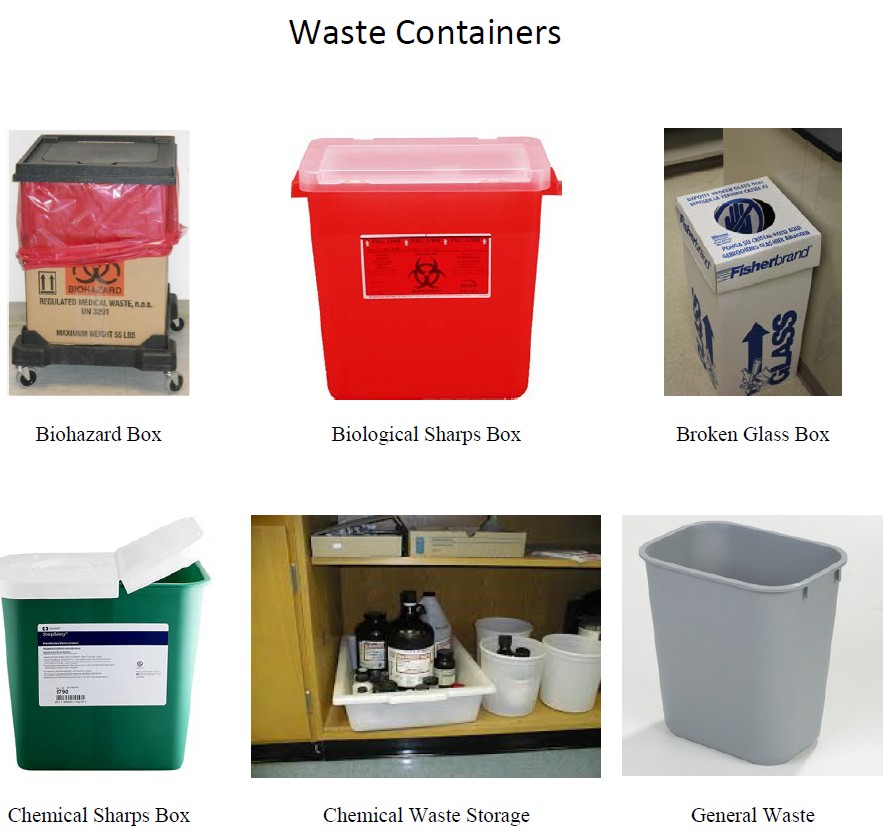
- Medical waste: including contaminated or potentially contaminated materials with biological agents, contaminated paper towels, Kim Wipes, visibly contaminated PPE, blood-saturated items, any non-sharp biowaste, closed disposable sharps containers, small sealed vials of bio-hazardous material. These materials are discarded into Bio-boxes, embossed with the universal biohazard warning label, which are provided by EH&S.
- Sharps containers: Used for the disposal of needles & syringes, razor blades or scalpel blades, Pasteur pipettes, contaminated pipette tips -- glass or plastic, slides & cover slips, lancets, contaminated capillary tubes, broken contaminated glassware. Sharps contains must not be over filled. When full, close the locking cap and place the sharps container in a Bio-box for disposal.
- Liquid Waste: Proper disposal of liquid waste will depend on the constituents of the liquid. If the liquid waste contains a chemical than it should be discarded as hazardous waste through the University’s waste vendor. If it contains only a biological agent, it may need to be sterilized, either chemically or steam sterilization. The method should be documented in the laboratory standard operating procedures discussed above.
- Animal Waste: See Section 11. Appendix g for the proper disposal of animal carcasses.
10. Emergency procedures
- Spill of a biological agent
- Contain the spill as quickly as possible using absorbent pads or paper towels
- Restrict access to the affect area to ensure researcher does not walk thru it
- Take steps to immediately clean the spill with pre-determined disinfectant, while wearing appropriate personal protective equipment (PPE)
- If spill involves broken glass use mechanical means such as tongs to pick up the glass
- Collect waste resulting from cleanup for sterilization; including pads, paper towels and PPE
- Wash your hands after removing PPE
- Report to the Principal Investigator and EH&S
- Personal Contamination
- Remove PPE and personal cloths that are contaminated
- Wash the affected area for 15 minutes
- If necessary use the emergency shower/eyewash station
- DO NOT LEAVE laboratory until decontamination is complete
- If need be, contact your Principal Investigator or EH&S for assistance
- If you are assisting another with personal with decontamination, wear appropriate PPE
- Wash hands after completed and before leaving laboratory
- Report incident to your Principal Investigator and EH&S
- Medical Emergency
- If an individual is sick, injured or unconscious and requires medical assistance call x9191
- When contacting Public Safety, remain on the phone answering all of Dispatch’s questions
- If possible, remove the individual’s PPE and move outside the BSL-2 laboratory
- Otherwise, take steps to assist the individual as much as possible
- If the individual must go to the hospital, transport by ambulance only. Do not selftransport!
- Notify the paramedics about the BSL-2 agent and associated hazard before they enter the Laboratory, so they can take steps to protect themselves
- Confirm that the paramedics relay the information about the BSL-2 agent to the hospital, so staff will be ready to receive a potentially contaminated patient
- Notify your Principal Investigator and EH&S
- Fire
- Know the fire egresses for the laboratory and the building
- In the event of a fire in a BSL-1 or BSL-2 laboratory, leave the laboratory immediate.
- Do not bother to remove your PPEs. Just exist the building.
- Go to the nearest exit from the building and pull the fire alarm.
- Exist the building and wait for assistance.
11. Appendix list
- IBC Registration Form
- Types of Biological Safety Cabinets
- SOP for The Safe Use of Autoclaves
- Safety Procedures for using a Centrifuge
- Decontamination/Sterilization Practices
- Procedure for the proper disposal of Animal Carcasses
- EH&S inspection form
- Emergency Response Notice
- Disposal Procedures for Laboratory Waste
Appendix A. Registration form
Biological Agents Registration form
Appendix B. Types and uses of BioSafety Cabinets
Introduction
Biosafety cabinets (BSCs) are hoods with high-efficiency particulate air (HEPA) filters that provide personnel, environmental and product protection when appropriate practices and procedures are followed. Safety equipment including BSCs, PPE, or other physical containment devices (e.g. safety centrifuge cups) must be used whenever procedures with a potential to create infectious aerosols or splashes are conducted or whenever high concentrations or large volumes of infectious agents are used. Examples of such procedures include pipetting, centrifuging, grinding, blending, shaking, mixing, vortexing, sonicating, opening containers with pressure differentials, or harvesting infected tissues. The BSC is the principal BL-2 device used in laboratories to provide such containment.
Types of BioSafety Cabinets
Three types of BSCs (Class I, II and III) are used in microbiological laboratories. Open-fronted Class I and Class II BSCs are partial containment devices that provide a primary barrier, offering significant levels of protection to laboratory personnel and to the environment when used in combination with good microbiological techniques
Class I BSC: This cabinet is suitable for work involving low to moderate risk agents, where there is a need for containment but not for product protection. It provides protection to personnel and the environment from contaminants within the cabinet. The Class I BSC does not protect the product from "dirty" room air.
Class II BSC: The Class II BSC protects the material being manipulated inside the cabinet (e.g. cell cultures, microbiological stocks) from external contamination. It meets requirements to protect personnel, the environment and the product. There are different types of Class II BSCs: Type A (A1, A2), Type B1 ant Type B2. The major differences between these types are in the percent of air that is exhausted or recirculated, and the manner in which exhaust air is removed from the work area. Type A1 and A2 are small cabinets, non-ducted, and the air is exhausted to the laboratory area. Type B1 and B2 are BSCs ducted that can exhaust the air removed outside the laboratory area, outside the facility. Although Type B1 is ducted, 40% of the air is recirculated and 60% removed or exhausted. BSCs Class II Type B2 are ducted with 100% of the air exhausted outside the facility.
Class III BSC or Glove Box: Class II BSC or glove box provides the highest attainable level of protection to personnel, the environment and the product. It is the only cabinet, which provides a total physical barrier between the product and personnel. It is for use with high-risk biological agents and is used when absolute containment of highly infectious or hazardous material is required. Additional information on the proper use and selection of a BSC is found on the BMBL.
Proper Use of a Biosafety Cabinet
All BSCs should be certified when they are installed, after they are moved, after full decontamination, and annually thereafter. EH&S provides annual certification of all BSCs at UMD. EH&S coordinates the annual certification and repair of all equipment as needed. The following are some important reminders on how to use the BSC.
- Make sure that you understand how your cabinet works;
- Plan your work;
- Do not disrupt the protective airflow pattern of the BSC. Rapidly moving your arms in and out of the cabinet, people walking rapidly behind you and open lab doors may disrupt the airflow pattern and reduce the effectiveness of the BSC;
- Minimize the storage of materials inside and around the BSC;
- Always leave the BSC running during use;
- Before using, wipe work surface with 70% alcohol. Wipe off each item you need for your procedures and place them in the cabinet;
- Do not place objects over the front air intake grille;
- Do not block the rear exhaust grille;
- Segregate clean and dirty (or contaminated items). Always work from "clean to dirty";
- Place a pan with disinfectant and/or a sharps container inside the BSC for pipette discard;
- It is not necessary to flame items. This creates turbulence in airflow and will compromise sterility. Heat buildup may damage the filters;
- Move arms slowly when removing or introducing new items into the BSC;
- If you use a piece of equipment that creates air turbulence in the BSC (such as a centrifuge, vortex, or blender), place equipment in the back third of the cabinet and stop other work while equipment is operating;
- Protect the building vacuum system from biohazards by placing a cartridge filter between the vacuum trap and the source valve in the cabinet;
- Clean up all spills in the cabinet immediately. (Follow SOP Bio-008). Wait 10 minutes before resuming work;
- When cleanup is finished, remove all materials used and dispose of them in a biohazardous waste container;
- Clean all interior surfaces with 70% alcohol;
- Run cabinet 10 minutes after cleanup, before resuming work, or turning cabinet off;
- Remove lab coat and gloves, wash hands thoroughly before leaving laboratory
Appendix C. Standard operating procedures for safe autoclave operations
The purpose of this document is to provide standard operating procedures for the safe use of autoclaves. Autoclaving is a process used to destroy microorganisms and decontaminate biohazardous waste and microbiological equipment used at Biosafety Level 1 and 2.
Hazards
Autoclaves use high pressure and high temperature steam for sterilization. The potential safety risks for the operators include:
- Heat burns from hot materials and autoclave chamber walls and door.
- Steam burns from residual steam coming out from autoclave and materials on completion of cycle.
- Hot fluid scalds from boiling liquids and spillage in autoclave.
- Hand and arm injuries when closing the door.
- Body injury if there is an explosion.
Safety
- To insure the health and safety of personnel using the autoclave, it is important for each department to maintain autoclaves and to train personnel in their proper use.
- It is the supervisor's responsibility to ensure employees are trained before operating any autoclave unit.
- Procedural and instructional documents provided by the manufacturer must be followed.
- Personal protective clothing and equipment must be worn when loading and unloading the autoclave.
- Autoclaves must be inspected at least annually. A basic visual inspection should be performed monthly by the person responsible for the autoclave. The inspection, service and repair records should available upon request.
- Spore strips may be used to validate autoclave effectiveness
Personal protective equipment
Equipment to protect against scalds and burns include:
- Heat-insulating gloves that provide complete coverage of hands and forearm
- Lab coat
- Eye protection
- Closed-toe footwear
Training
All personnel who use autoclaves must have successfully completed a training session from their supervisor on the safe operating procedures.
Material preparation
Ensure that the material is safe for autoclaving:
- Samples containing solvents or substances that may emit toxic fumes should not be autoclaved.
- Do not autoclave bleach!
- Glassware must be inspected for cracks prior to autoclaving.
Prepare and package material suitably:
- Loose dry materials must be wrapped or bagged in steam-penetrating paper or loosely covered with aluminum foil. Wrapping too tightly will impede steam penetration, decreasing effectiveness of the process.
- Loosen all lids to prevent pressure buildup. All containers must be covered by a loosened lid or steam-penetrating bung.
- Containers of liquid must not exceed two-thirds (2/3) full, with lids loosened.
- Glassware must be heat-resistant borosilicate.
- Plastics must be heat-resistant, i.e., polycarbonate (PC), PTFE (“Teflon”) and most polypropylene (PP) items.
- Discarded sharps must be in a designated ‘Sharps’ container.
- All items must be tagged with autoclave tape.
- Place items in secondary containers to secure and contain spills:
- Items should be placed in a stainless steel pan or other autoclavable container for their stability and ease of handling.
- Place containers of liquid, bags of agar plates, or other materials that may boil over or leak, into a secondary pan in the autoclave.
- The pan must be large enough to contain a total spill of the contents.
- Bags must not be tightly sealed as steam cannot penetrate.
- Biohazardous waste must be processed according to UMD EH&S guidelines.
Loading autoclave
- Wear lab coat, eye protection, heat-insulating gloves, and closed-toe shoes.
- Place material in autoclave. Do not mix incompatible materials.
- Do not overload; leave sufficient room for steam circulation. If necessary, place the container on its side to maximize steam penetration and avoid entrapment of air.
- Close and latch door firmly.
Operating autoclave
- Close and lock door.
- Choose appropriate cycle (e.g., gravity, liquid, or dry cycle) for the material. Consult the autoclave manual for assistance in choosing a cycle. The manuals for operation of the autoclave should be located near the autoclave.
- Set appropriate time and temperature if you are using a customized cycle.
- Start your cycle and fill out the autoclave user log with your contact information. A completed cycle usually takes between 1-1.5 hours, depending on type of cycle.
- Do not attempt to open the door while autoclave is operating.
- If problems with your autoclave are perceived, abort cycle and report it to your PI immediately.
Unloading autoclave
- Wear heat-insulating gloves, eye protection, lab coat, and closed-toe shoes.
- Ensure that the cycle has completed and both temperature and pressure have returned to a safe range.
- Wearing Personal Protective Equipment (PPE), stand back from the door as a precaution and carefully open door no more than 1 inch. This will release residual steam and allow pressure within liquids and containers to normalize.
- Allow the autoclaved load to stand for 10 minutes in the chamber. This will allow steam to clear and trapped air to escape from hot liquids, reducing risk to operator.
- Do not agitate containers of super-heated liquids or remove caps before unloading.
- Wearing heat-insulated gloves remove items from the autoclave and place them in an area which clearly indicates the items are ‘hot’ until the items cool to room temperature.
- Shut autoclave door.
Autoclave use log
- Entries must be placed in the log book each time the autoclave is used. These records are used for maintenance/service schedules and reporting of incidents, accidents and/or faults.
- Entries should include: operator's name, phone number, date, time and duration.
- The log book must be kept adjacent to the autoclave.
- An Autoclave Use Log example is provided in this document.
Maintenance and repair
- No person shall operate the autoclave unless the autoclave is in good repair.
- Only qualified professionals are permitted to make repairs.
- Report possible malfunctions to .
- Repairs are performed by your service contract or any other contractor you choose to hire.
Equipment malfunction
- If the autoclave does not operate exactly as expected, do not attempt to fix the problem. A notice shall be placed on the autoclave indicating that it is not to be used until the problem is diagnosed and corrected.
- Record the problem in the autoclave log book.
- Contact or your supervisor to report the problem.
- Only qualified professionals are permitted to make repairs.
Incident response
- All incidents, including a spill or release of biohazardous materials and recombinant or synthetic nucleic acid molecules, must be reported to your supervisor and Biosafety Officer.
- If any injury occurs seek first aid or, if necessary, seek medical assistance at UMD EH&S or by dialing 9191.
- If clothing is soaked in hot water/steam, remove clothing and place the injury in cool water.
- Place a notice on the autoclave indicating that it is not to be used until the cause of the incident is determined, procedures enacted to prevent future incidents, and the autoclave is deemed safe for operation.
Spill clean-up
- Spills may occur from a boil-over or breakage of containers.
- No operation of the autoclave is allowed until the spill is cleaned up.
- The operator is responsible for clean-up of spills. Contain the spilled material using paper towels. Use your laboratory’s spill kit if necessary. Wait until the autoclave and materials have cooled to room temperature before attempting clean-up.
- Review the Safety Data Sheet if appropriate, to determine appropriate PPE, spill cleanup and disposal protocols that are necessary.
- Dispose of the waste following the protocol appropriate for the material (e.g., red biohazard bag).
- If materials have been intermingled, follow the clean-up and disposal protocol for the most hazardous component of the mixture.
- Cracked glassware must be disposed of properly.
- Record the spill and clean-up procedure in the autoclave log book.
Appendix A: Procedure for Spore Testing Sterilization
The following procedure should be followed when testing to ensure that the autoclave effectively sterilized materials placed in the unit.
- Place vial in the center of the bag.
- Process the load using normal operating procedures.
- Follow any instructions provided by the testing supplier.
- If doing in-house testing, incubate at incubation temperature for 24 - 48 hours (see specific protocol included with ampules).
- Incubate a control vial that has not been autoclaved, media should turn yellow to indicate growth. If the control vial remains purple (colors may vary by test kit), there may be a problem with the batch of indicator vials and the test may not be valid. Repeat the run, and if the result is the same obtain a new set of test vials. Return the waste to the bin and re-run with a new batch of vials.
- If the test vial media is purple after incubating 72 hours, sterilization is successful, there was no growth.
- If the media turns yellow, the bacteria grew and sterilization failed.
- o Review the run chart to see if the physical conditions (time, temperature) were met. If they were, discontinue using the autoclave, return the waste to a biological waste bin, and contact the service provider to get the autoclave repaired.
- o Retest after the repairs are completed.
- Record all results and retain in the Autoclave logbook
Appendix D. The safe use of a centrifuge
Introduction
Centrifuges, which operate at high speed, have great potential for injuring users if not operated properly. Unbalanced centrifuge rotors can result in injury or death. Sample container breakage can release aerosols that are harmful if inhaled.
Safe use
The majority of all centrifuge accidents result from user error. To avoid injury, workers should follow the manufacturer’s operating instructions for each make and model of centrifuge that they use. Follow these steps for the safe operation of centrifuges:
- Ensure that centrifuge bowls and tubes are dry.
- Ensure that the spindle is clean.
- Use matched sets of tubes, buckets and other equipment.
- Always use safety centrifuge cups to contain potential spills and prevent aerosols.
- Inspect tubes or containers for cracks or flaws before using them.
- Avoid overfilling tubes or other containers (e.g., in fixed angle rotors, centrifugal force may drive the solution up the side of the tube or container wall).
- Ensure that the rotor is properly seated on the drive shaft.
- Make sure that tubes or containers are properly balanced in the rotor.
- Only check O-rings on the rotor if you are properly trained.
- Apply vacuum grease in accord with the manufacturer’s guidelines.
- Do not exceed the rotor’s maximum run speed.
- Close the centrifuge lid during operation.
- Make sure that the centrifuge is operating normally before leaving the area.
- Make sure that the rotor has come to a complete stop before opening the lid.
When centrifuging infectious materials, wait 10 minutes after the rotor comes to a complete stop before opening the lid. If a spill occurs, use appropriate decontamination and cleanup procedures for the spilled materials. Report all accidents to your supervisor immediately.
Appendix E. Decontamination/sterilization procedures
Introduction
This procedure covers common methods for the decontamination/sterilization of common materials, surfaces and equipment. For additional information refer to the recommended method for the biological agent you are using, the operations manual for equipment or the BMBL.
- All infectious materials and all contaminated equipment or apparatus must be decontaminated before being washed, stored, or discarded;
- Autoclaving is the preferred method for sterilizing biological waste. Consult Appendix d of the Biosafety Manual relating to the Safe Use of Autoclaves and the operations manual;
- Autoclaves should not be operated unattended or by untrained personnel;
- Special precautions should be taken to prevent accidental removal of material from an autoclave before it has been sterilized or simultaneous opening of both doors on a double door autoclave;
- Residual bleach, hypochlorite, or any other strong oxidizing material, must not be autoclaved with organic materials such as paper, cloth, or oil.
Decontaminating and Cleaning Reusable Labware
- All reusable plasticware or glass labware such as cylinders, flasks, beakers, and others that cannot be autoclaved for practical reasons, can be decontaminated by soaking the labware in 10% fresh bleach solution or as recommended by the manufacturer;
- Immerse completely all labware in a pail with a 10% fresh bleach solution and soak the material for at least one hour;
- Rinse with abundant water and a final rinse with distilled water;
- The equipment can be air-dried.
Decontaminating work surfaces or benches
- Before Work clean the bench- work surface with soap and water if it is soiled or wipe the surface with 10% fresh bleach solution followed with a water wipe down to remove all bleach residual;
- After Work clean, decontaminate and remove all equipment and supplies from the work area. Work surfaces should be wiped with a disinfectant that would kill the infectious agent that has been used.
Decontaminating equipment
- All equipment shall be cleaned and decontaminated before and after working with any biologically potential infectious material or blood;
- The use of 10% bleach can be corrosive for some equipment that has metal surfaces;
- Several commercial EPA approved disinfectants, which are not corrosive to metals, can be used on equipment with metal parts;
- Clean and decontaminate the equipment by following the instructions of the equipment-manufacturer or vendor;
- Plastic parts can be submerged in 10% bleach solution for 30 minutes, rinsed with abundant water and a final rinse with distilled water;
- Dry plastic parts with paper towels;
- Choose the appropriate disinfectant for the agent(s) that you are working with.
Decontaminating BioSafety Cabinets
- The BSC’s work surface should be kept in pristine condition;
- Disinfect by spraying the surface with 70% ethanol or isopropanol before and after each use;
- Corrosive chemicals such as 10% bleach should be avoided. In case of small spill, bleach 5-10% should be used and followed with a wipe down of abundant sterile water and 70% ethanol. See SOP Bio-010 for cleaning spills inside BSC;
- To avoid cross-contamination it is recommended to keep a cleaning/ decontamination log after disinfection of the BSC.
Decontamination of liquid waste
- All liquid biological waste should be collected in bottles or plastic containers that contain 100 ml of household bleach for each liter of liquid waste. The bottles should be labeled as hazardous waste and stored in the Satellite Accumulation Area (SAA).
- Small volumes generated from sample preparation can be inactivated by adding bleach at a final concentration of 10%, and then collected in labeled liquid-waste containers.
Appendix F. Procedure for proper disposal of animal carcasses
Purpose
This procedure provides guidance for the disposal of animal carcasses generated on campus, both contaminated and uncontaminated. If you have additional questions contact Environmental Health & Safety (EH&S).
Responsibility
Faculty: The faculty involved in research and instructional activities involving the use of animals are responsible for the proper disposal of animal carcasses.
EH&S: is responsible for coordinating, collection and disposal of animal carcasses identified as possibly biohazardous.
Definitions
Biohazardous: Infectious agents or hazardous biological materials that present a risk or potential risk to the health of humans, animals or to the environment. The risk can be direct through infection or indirect through damage to the environment. This includes animal blood, body fluids, tissues, carcasses, bedding, and other waste that contain organisms or agents not usual to the normal animal environment AND that are pathogenic or hazardous to humans
Bio-box: corrugated boxes provided by the vendor with the universal biohazardous warning label printed on the sides of the box.
Contaminated: Direct contact with a biohazardous agent.
Uncontaminated: Any item that has not had direct exposure to a biohazardous material, or that has had only incidental exposure consistent with Section B(c).
Disposal
Uncontaminated animal carcasses: If the condition of the carcasses does not meet the definition of biohazardous as described above, package the carcass in air-tight, opaque plastic bags. The carcasses should be frozen, and must be discarded in the normal trash.
Contaminated animal carcasses: Contaminated animal waste, including potentially infectious animal carcasses and cage bedding must be contained in leak proof, biohazard-labeled red bags within disposable, Bio-boxes to ensure that no discharge or release of waste occurs and reduces the possibility of odor. The Bio-box and bags may be obtained from EH&S. Boxed animal carcasses are transferred to the University’s biohazardous waste vendor for shipment to an incineration facility.
Exception: Animal carcasses used in instructional laboratories for an anatomy class in the Biology Department are collected and bagged in durable opaque plastic bags. These carcasses are placed in a Bio-box and shipped via the University’s waste vendor
Appendix G. EH&S Inspection form
Laboratory Inspection form - UR (PDF)
Appendix H. Emergency Response in a BSL-2 Laboratory
Contact information
- Public Safety: 508-999- 9191
- EH&S general number: 508-999-8811
- Bob Casparius, BioSafety Officer: 508-999-8176
Spill response
- Contain the spill as quickly as possible using absorbent pads or paper towels
- Restrict access to the affect area to ensure researcher does not walk thru it
- Take steps to immediately clean the spill with pre-determined disinfectant, while wearing appropriate personal protective equipment (PPE)
- If spill involves broken glass use mechanical means such as tongs to pick up the glass
- Collect waste resulting from cleanup for sterilization; including pads, paper towels and PPE
- Wash your hands after removing PPE
- Report to the Principal Investigator and EH&S
Personal contamination
- Remove PPE and personal cloths that are contaminated
- Wash the affected area for 15 minutes
- If necessary use the emergency shower/eyewash station
- Do not leave laboratory until decontamination is complete
- If need be, contact your Principal Investigator or EH&S for assistance
- If you are assisting another with personal with decontamination, wear appropriate PPE
- Wash hands after completed and before leaving laboratory
- Report incident to your Principal Investigator and EH&S
Medical emergency
- If an individual is sick, injured or unconscious and requires medical assistance call x9191
- When contacting Public Safety, remain on the phone answering all of Dispatch’s questions
- If possible, remove the individual’s PPE and move outside the BSL-2 laboratory
- Otherwise, take steps to assist the individual as much as possible
- If the individual must go to the hospital, transport by ambulance only. Do not self-transport!
- Notify the paramedics about the BSL-2 agent and associated hazard before they enter the Laboratory, so they can take steps to protect themselves
- Confirm that the paramedics relay the information about the BSL-2 agent to the hospital, so staff will be ready to receive a potentially contaminated patient
- Notify your Principal Investigator and EH&S
Appendix I. Disposal Procedures for Laboratory Waste
Introduction
There are up to five different waste streams produced in a laboratory depending on the research activities. What follows is a brief description of these waste types and the required method for disposal. If you have any question relating to waste disposal please contact EH&S.
Biological box
When biological box is full, lab personal must tie up red bags and seal box with packaging tape. For pick up please contact Wayne Leblanc 508-971-7785. Wayne will remove your box and will replace it with a new box and red bag which you must assemble.
- Contaminated paper towels, Kim Wipes, etc.
- Visibly contaminated PPE
- Blood-saturated items
- Any non-sharp biowaste
- Closed disposable sharps containers.
- Small sealed vials of bio-hazardous material.
- Serological pipettes
Biological sharps
All used sharps must be segregated into sharps containers that are non-breakable, leak proof, impervious to moisture, rigid, tightly lidded, puncture resistant, red in color, and marked with the universal biohazard symbol. When sharps container is full, place container into biological box for disposal.
- Needles & syringes
- Razor blades or scalpel blades
- Pasteur pipettes
- Contaminated pipette tips -- glass or plastic
- Slides & cover slips
- Lancets
- Contaminated capillary tubes
- Broken contaminated glassware
Note: liquid biohazardous waste must be disinfected and collected as hazardous waste.
Broken glass
Each laboratory must provide their own approved broken glass cardboard box for the disposal of broken glass generated in the lab. Once the cardboard box is full, the custodian staff will remove it from the lab and place it into the trash.
Chemical sharps
Each lab must provide their own approved chemical sharps container. The chemical sharps container must be labeled with a University hazardous waste label. After any use of sharps, place sharps into chemical sharps container. When sharps container is full, date it and place container in SAA (satellite accumulation area.)
Hazardous waste
Each lab must provide their own hazardous waste containers (unless otherwise noted.) All hazardous waste containers must be labeled with the University hazardous waste label. When the hazardous waste container is full, please make sure the following information is provided and place container into the SAA (satellite accumulation area) for pick up.
Labels must include the following information:
- The words, "Hazardous Waste."
- All hazardous constituents’ chemical names. Formulas or abbreviations are not permitted.
- The associated hazards of the waste (e.g. flammable, corrosive, reactive or toxic.)
- The date the container becomes full.
- The responsible person, department, building and room number and phone extension.
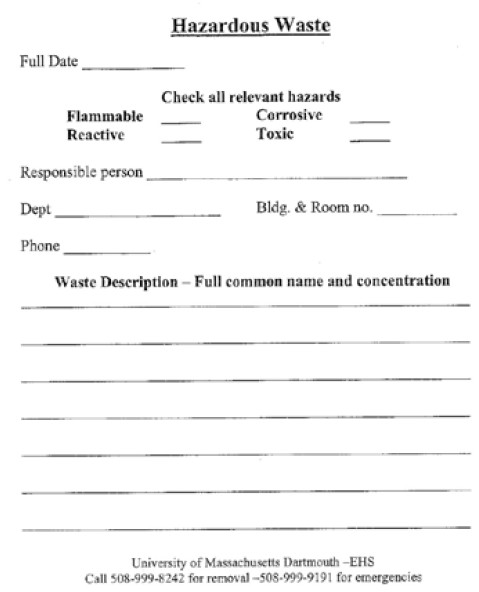
Hazardous waste will be picked up every Tuesday morning by Triumvirate Environmental.
Note: No chemical waste shall be poured down the sink.
Radioactive waste
Radioactive waste generated in a laboratory must be collected for proper disposal thru a radioactive waste vendor or held for decay for 10 half-lives. Contact the Radiation Safety Officer with questions relating to this waste type.
Regular waste
Regular waste containers are to be used for the disposal of non-contaminated papers, empty containers, gloves, etc. When in doubt discard potentially contaminated materials in a Biohazard Box.
Examples of waste containers